Categories: Ants, Home Protection Plan, Pest Control
Read time: 7 minutes
What Is a Sugar Ant?
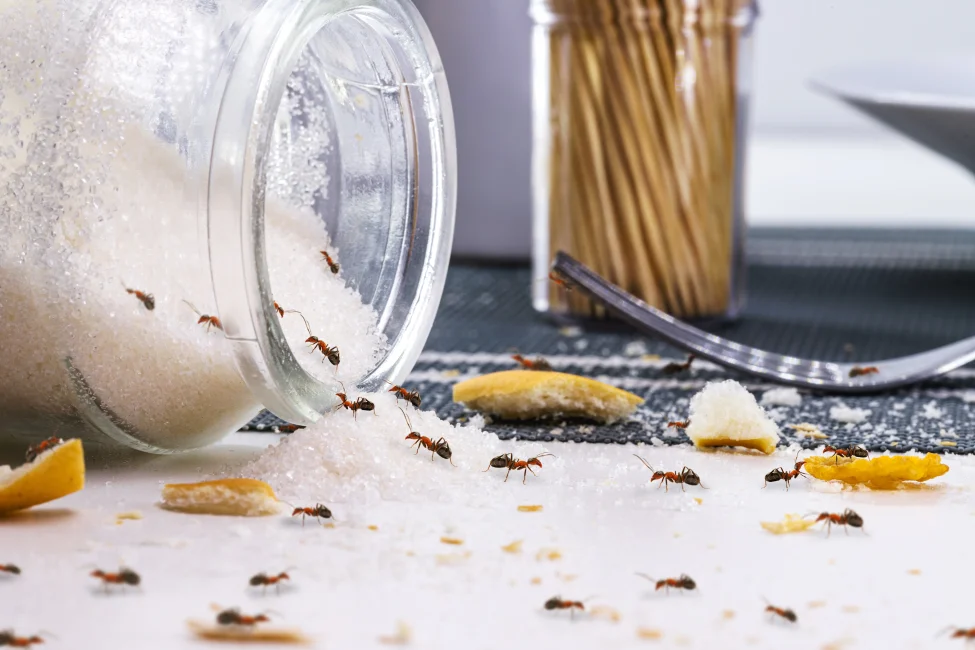
Have you ever wondered what a “sugar ant” really is? It’s a common question, and we have the answer! “Sugar ant” is a nickname people use for several small ants that love sweets. If you’ve ever seen a trail of little black or brown ants marching across your counter or inside your pantry, you’ve probably met one of these sugar-seekers.
Most of the time, sugar ants are more annoying than dangerous. They don’t chew through wires or furniture like termites, but they can contaminate food and make your kitchen feel like a tiny ant highway. Some, like carpenter ants, can also damage wood when they move in and start tunneling.
Common “Sugar Ants” You Might See
Here are the main types that fall under the “sugar ant” nickname, and what makes each one stand out.
- Argentine Ants Social butterflies of the ant world. They form huge colonies with lots of queens and love warm areas. Expect to see them in lines along sidewalks and foundations.
- Carpenter Ants These big guys don’t just eat sweets—they’ll also go for protein. They carve tunnels into damp or rotting wood, which can lead to structural damage over time.
- Odorous House Ants Probably the most common indoor ant. They like kitchens and bathrooms and hide in cracks or wall gaps. When crushed, they release a smell like rotten coconut (you’ll never forget it).
- Pavement Ants They hang out under sidewalks, driveways, and patios, then wander indoors in search of crumbs. You’ll often see them in neat, organized trails.
- Pharaoh Ants Tiny, yellowish ants that love warm, humid places like kitchens and laundry rooms. They’re tricky to get rid of because they hide in walls and have several queens.
What They Look Like
| Species | Color / Markings | Size |
| Argentine ant | Light to medium brown | 1/12 to 1/8 inch |
| Carpenter ant | Black or red + black | Up to ¼ inch (worker) |
| Odorous house ant | Brown or black, smells like rotten coconut when crushed | About 1/16 inch |
| Pavement ant | Dark brown to black | 1/16 to 1/8 inch |
| Pharaoh ant | Pale yellow to light red, darker abdomen | About 1/16 inch |
If the ants you spot are small and brown, they’re likely part of the “sugar ant” group. If they’re large and black or red, you might have carpenter ants instead.
Life Cycle & Behavior
Like most ants, sugar ants start as eggs, grow into larvae, then pupae, and finally become adults. Worker ants live for weeks or months, while queens can live for over a year.
Ants are busiest during warm weather, spring through late summer, but if they’re nesting inside your walls, they can stay active all year long. You’ll see the heaviest “ant traffic” in the mornings or whenever sweet food is left out.
Where Can You Find Sugar Ants
Sugar ants don’t just show up by accident, they move in where food and moisture make life easy. Whether it’s inside your kitchen or just outside your foundation, they’re always scouting for snacks and shelter.
- In your home: These ants hang out near kitchens, sinks, baseboards, and behind appliances. Pantries are their favorite, especially if there’s a sticky spill or open package. Once one finds food, it lays down a trail for the rest to follow, turning a few ants into a full-on parade.
- Outside: Most colonies start outdoors in soil, mulch, or under rocks and pavement cracks. You’ll often see small mounds near foundations, patios, or sidewalks—perfect launching spots for foragers headed indoors.
- Weather and regions: They thrive in warm, humid weather and are especially common in the South and Southwest. Still, any home with warmth, crumbs, and water can attract them, even in cooler states.
Sugar ants move wherever the conditions are right, which means they’ll keep showing up until the environment and the food source change. When outdoor food or moisture runs low, sugar ants turn their attention indoors. Leaky pipes, pet dishes, and forgotten crumbs give them everything they need to settle in. Keeping things clean and sealed is your best defense before they find their next sweet spot.
Are Sugar Ants Dangerous?
They might look like harmless little visitors, but sugar ants can still cause a few problems when they move in. They’re more of a nuisance than a threat, yet it helps to know what they can (and can’t) do.
Stings or bites: Most sugar ants don’t sting. A few might take a nibble if handled, but it’s nothing to worry about.
Damage: Carpenter ants are the real troublemakers here. They don’t eat wood, but they carve tunnels through it, which can weaken structures over time.
Health concerns: Since ants crawl through dirt, trash, and who-knows-what before reaching your kitchen, they can spread bacteria to counters and food.
For kids and pets: They’re mostly harmless, but it’s still unsettling to find them in your pantry or all over the dog’s food bowl.
While sugar ants won’t bite hard or chew through your walls, their messy habits make them uninvited guests. Once you know what draws them in, it’s easier to stop their parade before it starts.
What Attracts Sugar Ants
Sugar ants have one thing on their minds—food. If something smells sweet, sticky, or just a little bit greasy, they’ll find it. Once one scout discovers a good spot, the rest of the colony isn’t far behind.
- Spilled soda or juice – Even a few drops are enough to draw them in.
- Syrups, candy, or fruit – Anything sugary is prime ant bait.
- Pet food left out – The mix of fat and protein keeps ants coming back for seconds.
- Crumbs and unsealed containers – Open cereal boxes and snack bags are easy targets.
- Leaky pipes or damp wood – Moisture helps ants survive and build nests.
- Warm, humid air – The perfect setting for colonies to thrive.
Basically, if it’s sticky or sweet, it’s fair game. Cut off their buffet, and you’ll be one step closer to keeping your kitchen ant-free.
How to Get Rid of Sugar Ants
Once sugar ants find a good snack spot, they don’t leave without a fight. The trick is cutting off what’s attracting them and dealing with the colony—not just the ones you see.
- Clean up the buffet. Wipe down counters, rinse bottles, and seal food in airtight containers. Don’t forget pet bowls and sticky spots under appliances. Even a few crumbs can keep ants coming back.
- 2. Fix moisture issues. Leaky pipes, damp basements, and humid bathrooms are prime hangouts. Dry things out and keep air moving where moisture builds up.
- 3. Close the gaps. Ants are tiny but determined. Seal cracks around doors, windows, and plumbing lines to make it harder for them to sneak inside.
- 4. Use ant baits—not sprays. Sugar-based baits are the best way to tackle the colony. The workers carry the bait home, spreading it where it matters. Be patient—it takes a few days, but it’s far more effective than killing foragers on sight.
- 5. Treat outdoor nests if you spot them. Check along sidewalks, foundations, and mulch beds. Hitting the source outdoors helps cut down the number marching indoors.
- 6. Call in the experts if needed. If the ants keep coming back, you might have more than one hidden nest. A professional can identify the species and create a treatment plan that actually works.
Getting rid of sugar ants isn’t about luck—it’s about persistence. Tackle the source, tidy up the temptations, and you’ll send their snack mission somewhere else.
Why Call Fox Pest Control
Sugar ants might be small, but they’re smart. Once they find food or water, they’ll keep coming back until the source is gone. Staying one step ahead by cleaning up spills, sealing entry points, and tackling nests early, makes a big difference.
Still, even the cleanest homes can end up with an ant trail or two. When that happens, calling in the ant pest control pros is the quickest way to stop the cycle and get your kitchen back to yourself. That’s where Fox Pest Control comes in. Our licensed technicians know exactly which type of “sugar ant” you’re dealing with and how to target the colony at its source. We’ll build a plan that helps you feel comfortable in your home again without the constant crumb patrol. Give us a call today!