Free Inspections & EstimatesSame Day Service

Get Mole Control Near You

Moles, move on out!

Feel comfortable in your home. Let Fox Pest Control take care of your mole problem.

Same Day Service

Free Inspections & Estimates

Satisfaction Guaranteed

Fox Pest Control technician inspecting kitchen for pests

Fox techs are experts at evicting your tiny tenants.

To ensure our customers’ safety, all Fox Pest Control technicians undergo a thorough screening process and complete extensive classroom training, along with ongoing on-the-job mentoring with an experienced technician.

The easiest way to get rid of moles.

Wondering how to get rid of moles? Moles in the yard can cause a lot of damage if not dealt with, and while treating mole infestations is a specialty service, it’s not available everywhere. Be sure to reach out to see if we handle moles in your area!

Moles are those little mammals with velvety fur and big, paddle-like paws perfect for digging. Left unchecked, they can really tear up your yard. At Fox Pest Control, we know exactly how to take care of moles in your yard, so you can get back to enjoying your outdoor space. Call us today to find out if we offer mole services near you!

1

Schedule with Fox

Call Fox Pest Control today for a free inspection: (855) 953-1976.
Call before 2 pm and get same-day service.

Remote locations and other conditions may require next-day service.

2

Treatment

A certified technician will inspect your property and provide customized pest control treatment based on their findings.

3

Follow Up

Each service provides a detailed report and helpful tips to keep pests away. We return regularly throughout the year, increasing protection with every visit.

Hamilton Allen Ph.D., BCE

Certified Entomologist, Fox Pest Control

Mole Facts


Size: 4-11 inches
Number of legs: 4
Wings: no
Color: greyish-brown
Carry disease: no
Damages home/yard: yes
Most active season: spring & fall
Fox plan for this pest: Specialty Plan

What do moles look like?

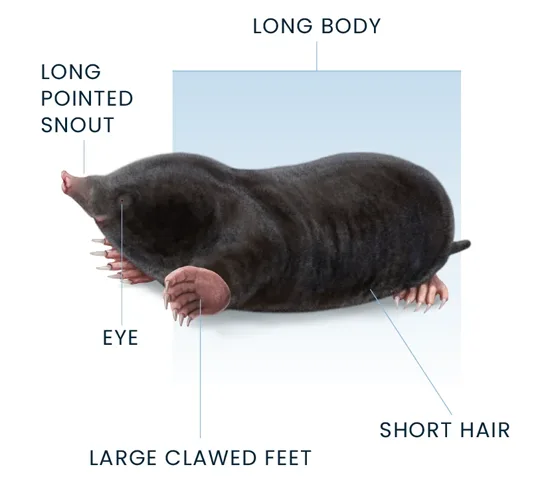
Mole Anatomy Diagram

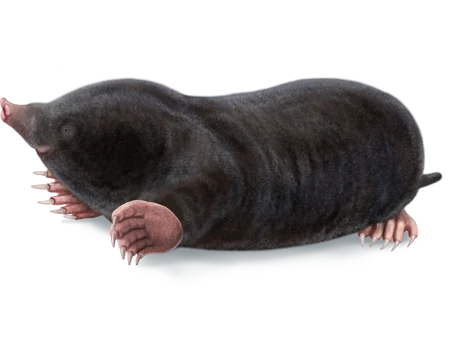
Mole

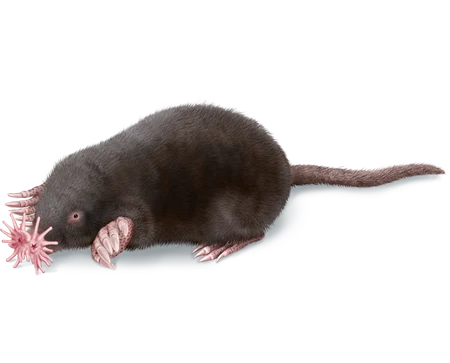
Star-Nosed Mole

Moles have hairless snouts, small eyes, and no external ears.

Their powerful front feet with webbed toes help with digging, while their narrow hind feet have slender claws. Because moles are nearly blind, they rely on a keen sense of smell to find their way around.

Moles are mostly insectivores, feeding on earthworms, insects, larvae, and other invertebrates found in the soil.

Moles are found across various habitats worldwide, including grasslands, woodlands, and gardens, where their burrowing activities can cause damage to lawns and gardens.

Moles are solitary creatures, living alone except during the breeding season.

A single mole typically ranges across more than one-fifth of an acre, with no more than three to five moles living on each acre. Usually, there are two to three moles per acre. Therefore, one mole may often traverse multiple yards. Effective control may require cooperation among several neighbors.

Moles prefer moist, loose soil for digging their tunnels.

Yards with well-irrigated lawns or gardens tend to have moist soil, making it easier for moles to create tunnels and find prey. Overwatering or poorly drained areas can create ideal conditions for moles.

Moles are some of the only animals that can smell in stereo.

This means they can detect odors immediately as well as figure out the direction from which they are traveling. Smelling in stereo is a great advantage for moles because it allows them to quickly and accurately locate food and predators.

Moles are super speedy diggers, digging up to 15 feet per hour!

That must be why they need to eat up to 70-100% of their weight each day!

To further explore the habits and behaviors of these underground pests, visit our Moles Pest Files—a valuable resource offering insights into mole activity, the damage they cause, and effective control solutions.


Pests that can be confused with moles.

People often confuse moles with voles and shrews, though they are very different. Learn more about voles here. Shrews are very small, hyper-active insectivores related to moles, and they have slender snouts, pointy noses, and small ears that you may not be able to see.

Mole

Vole

You might already know for sure that you have an mole problem. Here are a couple of the most common signs of mole infestation.

Circle-shaped mounds of soil pushed up onto the surface of the ground, often indicating the presence of underground tunnels.

Crisscrossing surface tunnels visible just beneath the soil, particularly after rain or watering, when the soil is softer and easier to dig.

Moles can damage grassroots close to the surface, leaving behind unsightly brown patches.

Areas of the lawn that feel spongy underfoot or appear sunken, indicating the presence of extensive tunnel networks beneath the surface.

Maintain a tidy yard

Don’t overwater

Control insects in the yard

Encourage natural predators

Install underground fencing or barriers

People like us.
Pests don't.

4.72 Average | 45,000+ Reviews

Bryan A.

I could not be more pleased with our initial home treatment today! Vincent arrived on time and was extremely thorough in his explanation of the services he performed. He was very polite, respectful of our inside spaces, and had a great attitude throughout the visit. A++ professional! Thank you!

Kayla B.

Overall - very satisfied with communication and job done for my first time ever hiring pest control. Very knowledgeable and explains everything. Makes it very easy to maintain for a super busy family like ours.

Fox Guarantee: We Come Back for Free!

    What type of property do you need help with?

    Are you a current customer?


    By clicking the checkbox, I am providing my eSign signature and consent to Fox Pest Control contacting me at the number above for marketing purposes including through the use of automated technology, SMS/MMS messages, and prerecorded and/or artificial voice messages (including AI generated messaging).  I acknowledge my consent is not required to purchase and I can connect with Fox Pest Control without providing consent by calling 833-667-3785. Message frequency may vary, and message & data rates may apply. Reply 'STOP' to unsubscribe. Reply 'HELP' for help. I also agree to the Fox Pest Control Privacy Policy and Terms of Use.

    Fox Pest Control technician talking to female customer

    Mole FAQs

    How does Fox treat moles?

    Some pests are unique and require special Pest Control services. At Fox Pest Control, we offer specialty treatments for pest problems, such as bed bugs, moles, voles, and, in some areas, spotted lanternflies. For more information on how we can help you with your mole problem, call us today!

    What do moles eat?

    Moles primarily eat earthworms, insects, larvae, and other invertebrates found in the soil.

    Why are there moles in my yard?

    Moles go where they can find food. They may be in your yard because it provides a suitable habitat with moist soil and abundant food sources like earthworms, grubs, and insects.

    Are there any benefits to having moles in your yard?

    While moles may aerate the soil and control pest populations by consuming insects, their tunneling activities can also disrupt lawns and gardens.

    Do moles bite? Are moles dangerous?

    While they have the potential to bite, they rarely, if ever, bite people. They do not usually come up to the surface, so human contact is rare. Their tunneling can damage lawns, gardens, and crops, making lawns uneven and creating a tripping hazard.

    How do you fill in mole tunnels?

    To fill in molehills, simply use a shovel or rake to redistribute the dirt, preserving the grass underneath if done promptly. For bare spots, scatter grass seed and water regularly. Flatten tunnels by pressing them down with your foot to make sure you’ve packed them firmly.