Free Inspections & EstimatesSame Day Service

Rat Pest Control & Removal Near You

Rats, it's time to scat!

Feel comfortable in your home. Let Fox Pest Control take care of your rat problem.

Same Day Service

Free Inspections & Estimates

Satisfaction Guaranteed

Fox Pest Control technician inspecting kitchen for pests

Fox techs are experts at evicting your tiny tenants.

To ensure our customers’ safety, all Fox Pest Control technicians undergo a thorough screening process and complete extensive classroom training, along with ongoing on-the-job mentoring with an experienced technician.

The easiest way to get rid of rats.

Got rats? The best way to handle a rat infestation is to understand their behavior and stop them before they take over. As your trusted rat exterminator, we’ll take care of any rat problems you’re dealing with. With our expert rat removal services and Home Protection Plan, your home stays protected from rats all year long. And if they somehow find their way back in, we’ll come back for free to handle it. Don’t wait—call Fox Pest Control today!

1

Schedule with Fox

Call Fox Pest Control today for a free inspection: (855) 953-1976.
Call before 2 pm and get same-day service.

Remote locations and other conditions may require next-day service.

2

Treatment

A certified technician will inspect your property and provide customized pest control treatment based on their findings.

3

Follow Up

Each service provides a detailed report and helpful tips to keep pests away. We return regularly throughout the year, increasing protection with every visit.

Hamilton Allen Ph.D., BCE

Certified Entomologist, Fox Pest Control

Rat Facts


Size: up to 16”
Number of legs: 4
Wings: no
Bites or stings: yes
Color: brown and black, with lighter underside
Carry disease: yes
Damages home/yard: yes
Most active season: year-round
Fox plan for this pest: Home Protection Plan

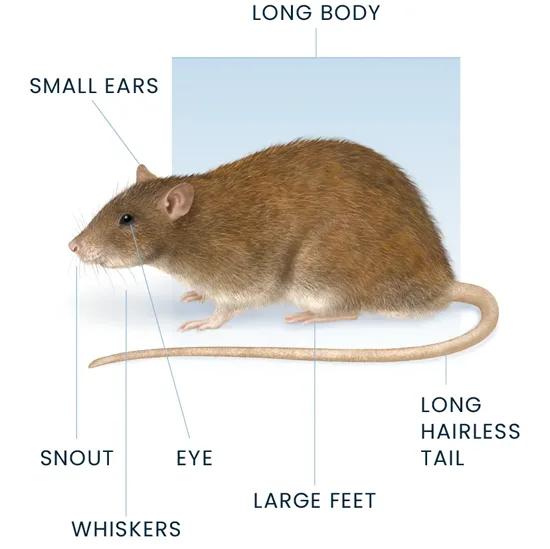
What do rats look like?

Rat Anatomy Diagram

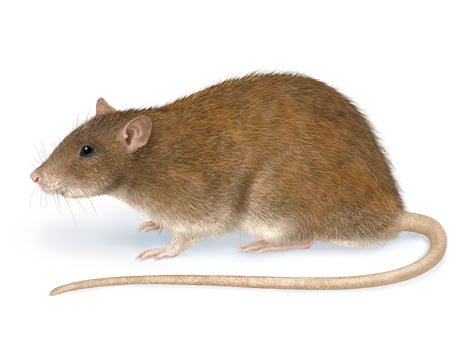
Norway Rat

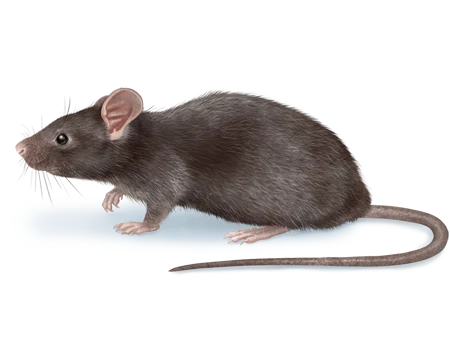
Roof Rat

Rats are furry creatures with long tails.

They have a constant need to chew to keep their teeth from growing too much. These rodents are medium-sized, larger than mice but smaller than beavers.

There are about sixty recognized species of rats.

Each species varies in color, diet, habitat, and size. In the United States, we generally deal with two main species: the Norway rat and the roof rat.

A group of baby rats are called rat kittens.

There are usually about 6-8 in a litter, are born hairless, deaf, and blind. As they grow, they gain weight, switch to solid food, and become more active.

Adult rats generally measure 9-11 inches, with tails spanning 7-9 inches.

With better nutrition, domesticated or pet rats may be more robust due to less energetic activity. Wild rats, relying on foraging, tend to be leaner and have shorter lifespans than their housed counterparts.

Rats usually live between 1 to 3 years.

Roof rats have a lifespan of about 1 year, while Norway rats can live for over two years. Domesticated rats tend to live longer than wild ones. Pups become independent at three weeks, and sexual maturity begins at five weeks for most rodents, including rats. Females are ready to mate between the fifth and eighth week, while males mature later, at 10 to 12 weeks. Pregnancy lasts 21-23 days, and females can conceive again shortly after giving birth.

To gain a deeper understanding of these persistent rodents, explore our Rats Pest Files—a comprehensive resource covering rat behavior, the threats they pose, and effective strategies for prevention and control.


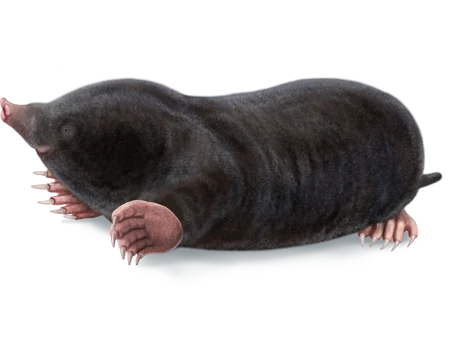
Pests that can be confused with rats.

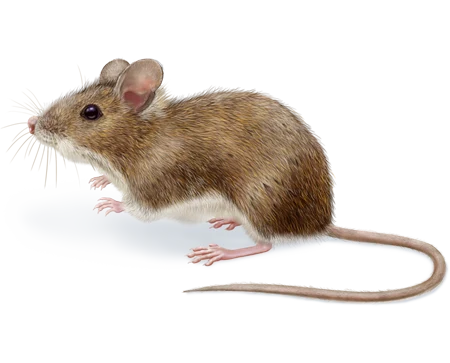
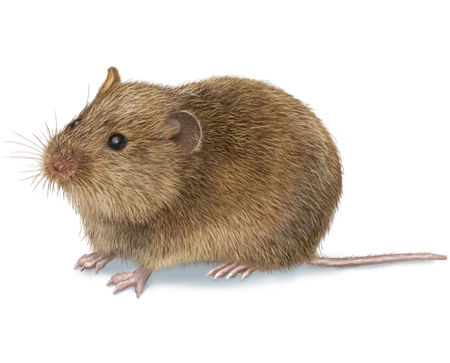
People often mistake rats for voles, moles, mice, muskrats, and even rabbits.

Mole

Mouse

Rat

Vole

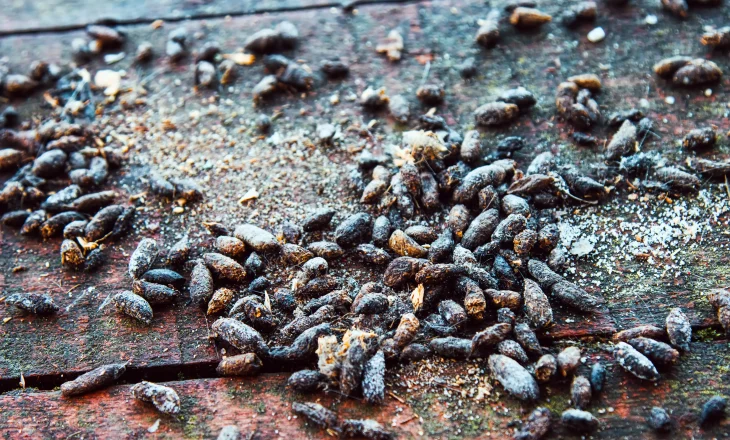
You might already know for sure that you have an rat problem. Here are a couple of the most common signs of rat infestation.

These are small, dark, and pellet-shaped, typically found near food sources, in cabinets or pantries, along walls, or in hidden corners.

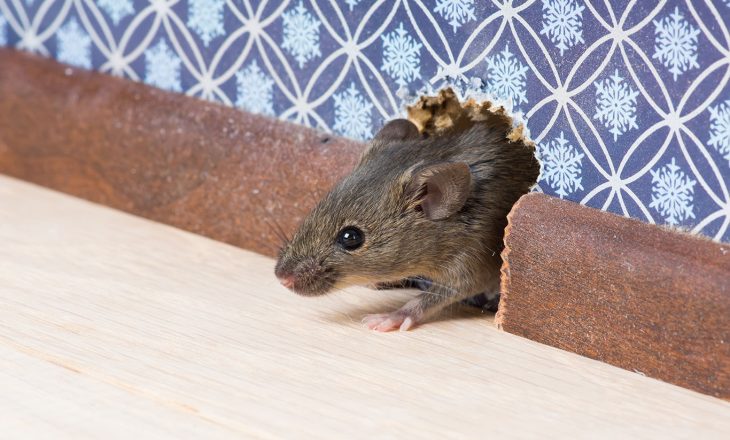
Rats have strong teeth that are continually growing, leading them to gnaw on various materials. Look for chewed wires, cardboard, plastic, and wood around the home.

Rats mark their territory with urine, leaving noticeable stains and a distinct, unpleasant smell, almost like stale ammonia. The odor may be particularly strong in enclosed spaces.

Rats use shredded paper, fabric, or plant matter to create nests. Discovering nests in secluded areas, such as attics or basements, is a sign of an infestation.

Rats are active at night, so you might not hear anything. However, if you hear scratching, squeaking, or scampering sounds in walls, ceilings, or under floorboards, you most likely have some uninvited guests.

Rats often follow the same pathways as they move around. You can spot their footprints by checking for dust or dirt that marks their tracks. To confirm a rodent pathway, sprinkle some flour, and you’ll probably see footprint marks the next day.

Your dog or cat will notice rodents in your home before you do. Unusual behavior from pets, such as increased barking, scratching, or agitation in specific areas, may indicate the presence of rats.

Seal entry points

Clean regularly

Store food properly

Keep garbage sealed

Reduce clutter and clean frequently

Keep yard clean & tidy

People like us.
Pests don't.

4.72 Average | 45,000+ Reviews

Bryan A.

I could not be more pleased with our initial home treatment today! Vincent arrived on time and was extremely thorough in his explanation of the services he performed. He was very polite, respectful of our inside spaces, and had a great attitude throughout the visit. A++ professional! Thank you!

Kayla B.

Overall - very satisfied with communication and job done for my first time ever hiring pest control. Very knowledgeable and explains everything. Makes it very easy to maintain for a super busy family like ours.

Fox Guarantee: We Come Back for Free!

    What type of property do you need help with?

    Are you a current customer?


    By clicking the checkbox, I am providing my eSign signature and consent to Fox Pest Control contacting me at the number above for marketing purposes including through the use of automated technology, SMS/MMS messages, and prerecorded and/or artificial voice messages (including AI generated messaging).  I acknowledge my consent is not required to purchase and I can connect with Fox Pest Control without providing consent by calling 833-667-3785. Message frequency may vary, and message & data rates may apply. Reply 'STOP' to unsubscribe. Reply 'HELP' for help. I also agree to the Fox Pest Control Privacy Policy and Terms of Use.

    Fox Pest Control technician talking to female customer

    Rat FAQs

    What is the difference between a Norway rat and a roof rat?

    In the United States, the most common rats we see in the pest control industry are the Norway rat and the roof rat. Both are considered pests and known carriers of diseases, but they differ in size, appearance, and behavior.

    • Appearance: Roof rats have smooth, gray, or black fur on top and light-colored undersides, while Norway rats have coarse coats that are more brownish-gray. You can also tell them apart by their size. Roof rats are usually around eight inches long when they’re grown, while Norway rats can reach lengths of up to ten inches. Another distinguishing feature is their tails – roof rats tend to have much longer tails compared to Norway rats. Norway rats also have a blunt muzzle and roof rats have a pointed muzzle.
    • Behavior: This is where we see the biggest difference between the two rats. Roof rats search for food and shelter up high, using power lines and tree branches to sneak into houses or stores. They make nests in attics, ceilings, and empty spaces within walls. While they will eat almost anything, they prefer seeds, nuts, and berries whenever possible. They also feed on slugs, snails, and other insects. On the other hand, Norway rats are great diggers and prefer staying low to the ground. They dig tunnels along buildings, near gardens, or under piles of garbage. To get inside buildings, they use vents and small openings around pipes. Norway rats are opportunistic eaters and will eat practically anything, but prefer meat, fish, and cereal.

    Neither pest is a good option for a house guest, so if you suspect you have a rat problem, contact Fox Pest Control today! We’re rat control experts and ready to help you take back your home!

    How did rats get in my house?

    Rats can easily squeeze into tiny spaces, fitting into gaps or cracks about a ½ inch wide, and then wiggle their way through. Regularly inspecting and securing potential entry points can help prevent rat infestations in your home. If you suspect a rat problem, call Fox Pest Control today!

    Why are rats in my house?

    Rats enter homes looking for food, water, and shelter. The kitchen, basement, or other places with food storage are often the most obvious hiding places. To prevent rats, it’s crucial to eliminate attractants such as accessible food, water, and shelter. Seal potential entry points, keep the surroundings clean, and address any issues that might make your home appealing to rats. If you suspect rats are living in your home, call Fox Pest Control. When you sign up for our Home Protection Plan, we treat your home year-round so you can always feel safe and protected in your home.

    Are rats dangerous?

    Yes, rats can pose several dangers, both to human health and property. Rats can carry diseases such as leptospirosis, the bubonic plague, and hantavirus. Because they often travel directly from an unsanitary area to your kitchen, they can also spread salmonella. Rats may also be infested with fleas or ticks that can carry diseases. Because rats have strong and continuously growing incisors, they gnaw on various materials, including wood, wires, and insulation. This behavior can result in structural damage to buildings, electrical issues, and even fire hazards. If you want to protect your family and home from rats, call Fox Pest Control today.

    Do rats destroy houses?

    Yes, rats can cause significant damage to homes and structures. Their destructive behavior is mainly driven by their need to gnaw and chew continuously to keep their incisors from growing too long. This gnawing behavior can damage wooden structures, electrical wiring, plastic, and metal. Rats leave behind droppings, urine, and hair that can contaminate surfaces and materials, posing health risks.

    Can rats have rabies?

    Rats are not common carriers of rabies. Rabies is a viral disease that primarily affects mammals, and it is usually transmitted through the saliva of an infected animal, typically via bites. While many mammals can carry and transmit rabies, rodents like rats are less likely to be carriers.

    Do rats like cheese?

    The idea that rats love cheese, as shown in movies, is not entirely correct. Rats eat various foods, and while they can eat cheese, it’s not their favorite. Rats prefer a mix of grains, fruits, vegetables, and proteins. They like high-calorie and easy-to-find foods. Rats’ food choices depend on what’s available, how hungry they are, and what they’re used to eating. In the wild, rats look for a balanced diet to stay healthy.

    What do rats eat?

    Rats are opportunistic eaters with a varied diet. While preferences can vary among individual rats, they’ll usually eat everything from fruit and nuts to vegetables, meat, and garbage. They enjoy high-energy foods like high-sugar foods or high-protein foods. They willingly dig into pet food, bird seed, peanut butter, or other foods if they can.

    What’s the difference between rats and mice?

    Rats and mice are both rodents, but they have several differences in size, appearance, behavior, and habitat. Understanding these differences can help identify and manage rodent infestations effectively.

    Here are some key distinctions between rats and mice:

    • Body Size: Rats are generally larger than mice. Adult rats can be 9 to 11 inches long (excluding the tail). Mice are smaller, with adult mice typically measuring 2.5 to 4 inches (excluding the tail).
    • Ears: Rats have larger ears relative to their body size, and their ears are more prominent. Mice have relatively smaller ears compared to rats. Mice’s ears are more rounded, while rats have a slimmer ear shape.
    • Tail: Rats have longer tails compared to mice. A rat’s tail is usually shorter than its body, but it’s longer in proportion to its body than a mouse’s tail.
    • Droppings: Mice feces are about the size and shape of a grain of rice. Norwegian rat droppings are pill-shaped, and roof rat droppings are banana-shaped. Mice spread their droppings everywhere, but rats are more careful and use a specific hiding spot as a “latrine.”

    Whether it’s a rat or a mouse that’s invaded your home, Fox Pest Control will take care of you. Both rodents are included in our Home Protection Plan, which means you get year-round protection for your family. Call today!