Free Inspections & EstimatesSame Day Service

Get Ant Control Near You

Give ants the boot.

Feel comfortable in your home. Let Fox Pest Control take care of your ant problem.

Same Day Service

Free Inspections & Estimates

Satisfaction Guaranteed

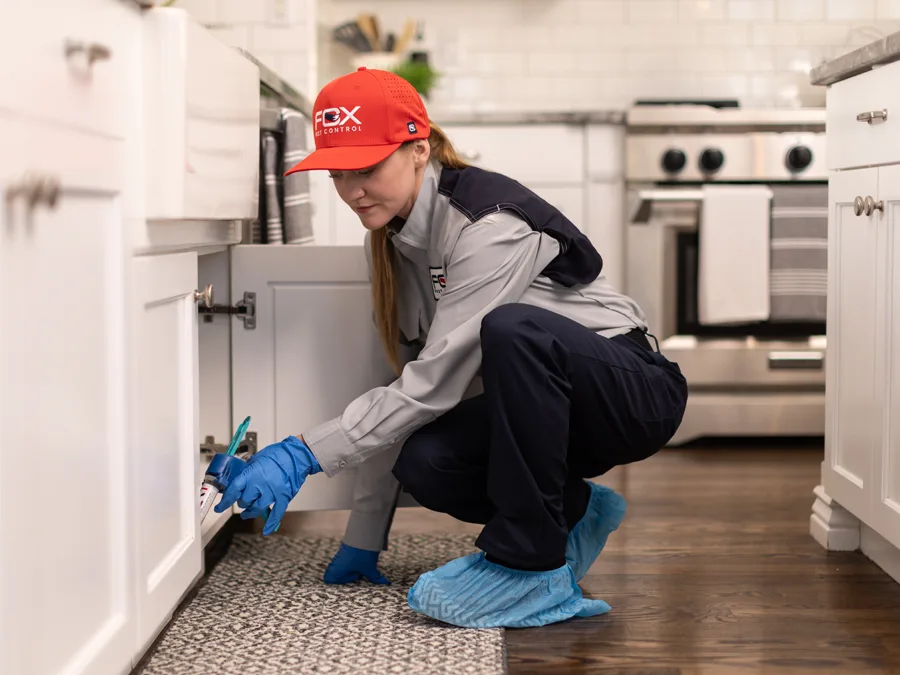
Fox Pest Control technician inspecting kitchen for pests

Fox techs are experts at evicting your tiny tenants.

To ensure our customers’ safety, all Fox Pest Control technicians undergo a thorough screening process and complete extensive classroom training, along with ongoing on-the-job mentoring with an experienced technician.

The easiest way to get rid of ants.

Got ants? The best way to send them packing is to call Fox Pest Control! We’re pros when it comes to ant control, so you can trust us to handle any infestation, big or small. Plus, our Home Protection Plan keeps your home protected all year long. Our ant control works so well, we guarantee you’ll be happy with the results! If you ever spot ants again, just give us a call, and we’ll take care of them for free.

1

Schedule with Fox

Call Fox Pest Control today for a free inspection: (855) 953-1976.
Call before 2 pm and get same-day service.

Remote locations and other conditions may require next-day service.

2

Treatment

A certified technician will inspect your property and provide customized pest control treatment based on their findings.

3

Follow Up

Each service provides a detailed report and helpful tips to keep pests away. We return regularly throughout the year, increasing protection with every visit.

Hamilton Allen Ph.D., BCE

Certified Entomologist, Fox Pest Control

Ant Facts


Size: 1/8th to 1-inch
Number of legs: 6 legs
Wings: yes, some
Bites or stings: yes
Color: black, brown, red, yellow
Carry disease: no
Damages home/yard: yes
Most active season: March – October; year-round in warmer climates
Fox plan for this pest: Home Protection Plan

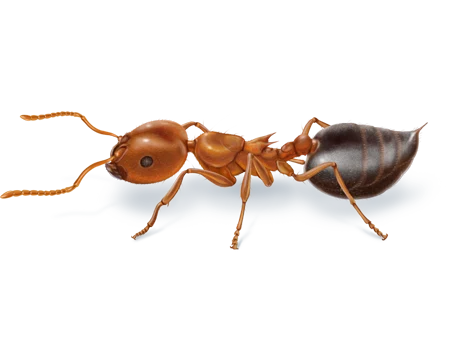
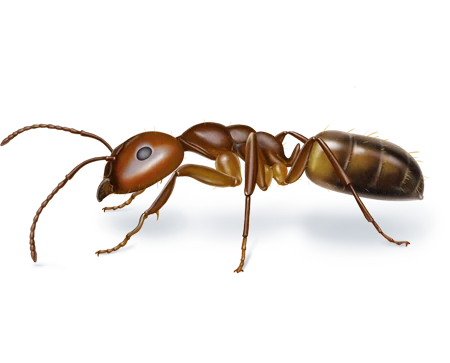
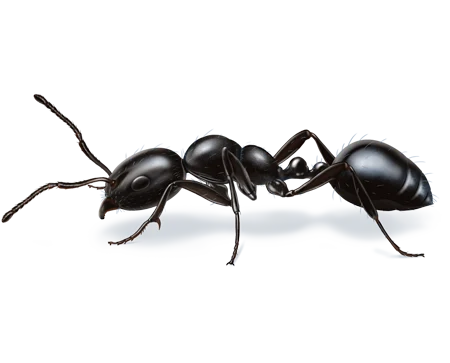
What do ants look like?

There are over 15,000 species of ants! While we don’t treat all of them, we can help you identify what’s bugging you and take care of them.

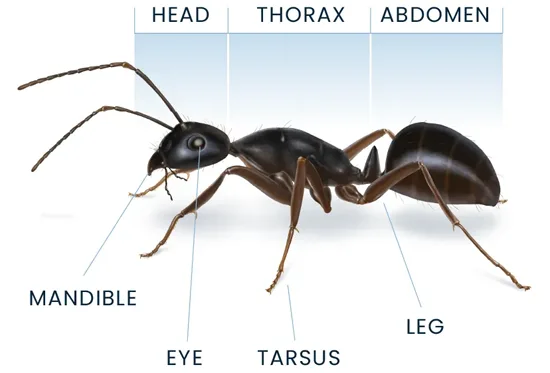
Ant Anatomy Diagram
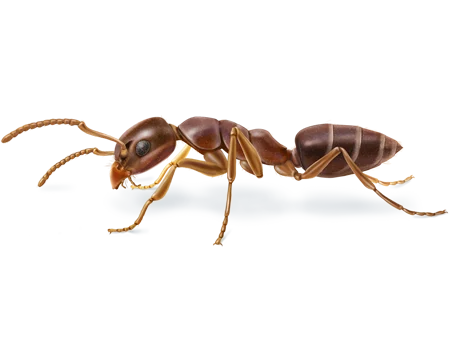
Acrobat Ant

Acrobat Ant

Argentine Ant

Argentine Ant

Little Black Ant

Little Black Ant

Odorous House Ant

Odorous House Ant

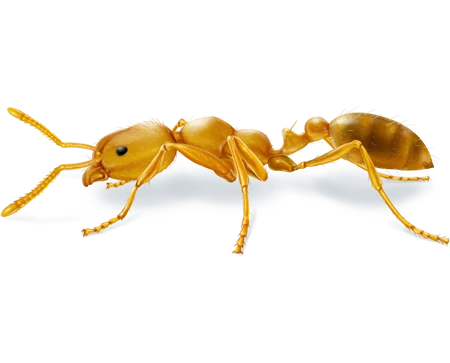
Pharaoh Ant

Pharaoh Ant

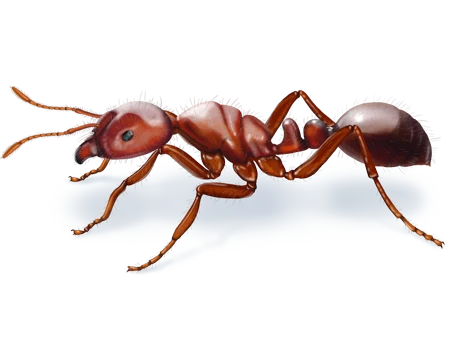
Red Imported Fire Ant

Red Imported Fire Ant

There are over 12,500 known species of ants!

The most common species you may find around your home are Argentine ants, Carpenter ants, Fire ants, Ghost ants, Little Black ants, Odorous house ants, Pharaoh ants, and Sugar ants.

Ants are very social creatures!

They live in colonies with a hierarchy, including a queen, workers, and broods (larvae and pupae). There are only female worker ants; males mate with females and then die. Workers build nests, care for queens and broods, forage for food, and defend colonies from invaders.

Certain ants create many connected colonies with tunnels and paths.

These ants are called “polydomous,” and they’re tricky to manage. Examples of polydomous species include Argentine, Crazy, Odorous House, and Pharaoh ants.

The most challenging ant species to control have multiple queens.

Getting rid of a colony like this means you have to take out all the queens, and it’s really tough because they might have nests all over the place, even on different properties!

Some ants can lift up to 5,000 times their own weight!

Ants are strong for their size because they are lightweight. Their muscles can focus all their strength on lifting things because their hard outer shells handle most of the support. On the other hand, humans carry heavier loads compared to our body weight. Since our muscles support our body weight, we have less strength available to lift other objects.

For a deeper dive into ants, explore the Ant Pest Files and discover everything you need to know about these common invaders.

Pests that can be confused with ants.

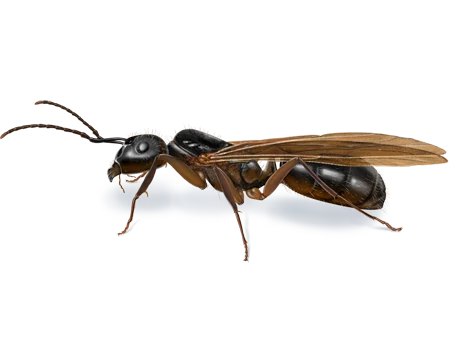
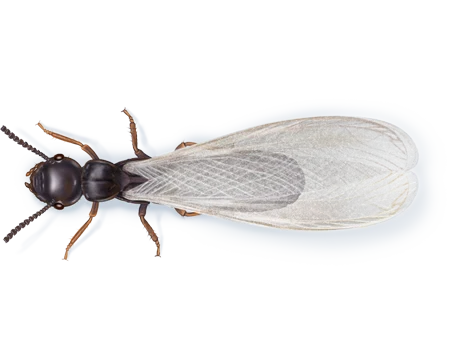
Reproductive ants have wings and leave the nest to find a mate and start a new colony. They are often confused with swarming termites, called alates, which also leave the colony to start their own.

Ant

Ant

Termite

Termite

You might already know for sure that you have an ant problem. Here are a couple of the most common signs of an ant infestation.

Ants use pheromones to create paths for other colony members to follow. They can enter your home through foundations, windows, doors, and pipes. Check for ant activity on tree limbs touching your house.

When an ant discovers a food source, he releases pheromones to leave a trail for his colony to follow. This chemical communication can cause an ant swarm, even when there’s no food around. Often seen in grass, sand, and cracks in brick or cement.

Ranging from shallow nests at 1-2 inches deep to the entrance of intricate tunnel systems exceeding 15 feet in depth, a dirt mound may indicate an active ant colony. These mounds are found in bare dirt, sand, or within growing, healthy grass.

Ants like to keep their nests tidy. To keep their nests clean, the worker ants will pile up dead ants, old food items, and debris outside the nest.

Seal entry points

Clean regularly

Store food properly

Keep garbage sealed

Fix water leaks

Trim vegetation

People like us.
Pests don't.

4.72 Average | 45,000+ Reviews

Bryan A.

I could not be more pleased with our initial home treatment today! Vincent arrived on time and was extremely thorough in his explanation of the services he performed. He was very polite, respectful of our inside spaces, and had a great attitude throughout the visit. A++ professional! Thank you!

Kayla B.

Overall - very satisfied with communication and job done for my first time ever hiring pest control. Very knowledgeable and explains everything. Makes it very easy to maintain for a super busy family like ours.

Fox Guarantee: We Come Back for Free!

    What type of property do you need help with?

    Are you a current customer?


    By clicking the checkbox, I am providing my eSign signature and consent to Fox Pest Control contacting me at the number above for marketing purposes including through the use of automated technology, SMS/MMS messages, and prerecorded and/or artificial voice messages (including AI generated messaging).  I acknowledge my consent is not required to purchase and I can connect with Fox Pest Control without providing consent by calling 833-667-3785. Message frequency may vary, and message & data rates may apply. Reply 'STOP' to unsubscribe. Reply 'HELP' for help. I also agree to the Fox Pest Control Privacy Policy and Terms of Use.

    Fox Pest Control technician talking to female customer

    Ant FAQs

    What is the best way to get rid of ants?

    The best way to get rid of ants and make sure they stay gone is to use our helpful ant control tips in combination with our Home Protection Plan. By signing up with Fox Pest Control, you get year-round protection from pests entering your home. Our ant exterminators have the tools and expertise to make your home feel comfortable and safe.

    Why do ants keep coming back?

    Ants persistently return because they leave chemical trails called pheromones. These trails help other ants in the colony locate their nest or find food. Cleaning where you’ve seen visible trails may not be enough; eliminating the food source, regular cleaning, and sealing entry points can disrupt trails but not eliminate the problem. When you sign up for our Home Protection Plan, our technicians will create a barrier around your home, effectively blocking all pathways into your home. If pests somehow find their way back into your home, call us. We’ll come back for an additional service for free!

    Do ants bite?

    All ants have mandibles, so they all have the ability to bite you. However, some species sting and then bite, and others just sting. In the United States, the most dangerous ants are generally not harmful to humans in a life-threatening way. Everyone will react differently to ant bites, so it’s important to contact your healthcare provider if you’re worried. The following ants are known for their aggressive behavior:

    • Red Imported Fire Ant: These ants are known for their painful stings, and their colonies can behave aggressively. Some individuals may experience severe allergic reactions.
    • Texas Bullet Ant: These are currently only found in Texas and have an extremely painful sting that can cause severe pain and swelling.
    • Harvester Ants: Some species of harvester ants in the U.S. have potent venom, and their stings can be painful.
    • Carpenter ants: The danger posed by this species comes when they carve tunnels and galleries through wood, causing major structural damage.

    When you’re dealing with persistent ants like these, you need the expertise of our professional ant exterminators. At Fox Pest Control, we offer a Satisfaction Guarantee, which means we’ll keep coming back to take care of pests until they’re gone.

    What do ant bites look like?

    If you’ve been bitten or stung by an ant, you may see a raised, red welt and slight swelling around the mark. If you’ve been stung by a fire ant, the mark might resemble a pimple with a pus-filled blister, which will most likely sting. Everyone reacts differently to ant bites, and some may not react at all. If you’re concerned or unsure about what bit you, it’s a good idea to contact a healthcare provider.

    What is the difference between a regular ant and a carpenter ant?

    One noticeable difference is their size. While most ants are about 1/8 inch long, carpenter ant workers can be up to four times bigger, from 1/4-1/2 inch long. They’re also different because of their nesting behavior – while most ants will nest in trees, soil, and plants, carpenter ants excavate wood to create nests, often causing structural damage. We cover many types of ants in our Home Protection Plan, so you’ll have year-round protection from all the ants trying to enter your home.

    How long do ants live?

    Ant lifespans vary by species and caste (worker, queen, or male), influenced by environmental conditions and colony health. Here are some general guidelines:

    • Worker Ants: Most worker ants, constituting the majority of a colony, live for a few weeks to months, influenced by their role, environmental conditions, and the presence of predators.
    • Queen Ants: Queen ants live for several years to decades, some with exceptionally long lives. Their primary role is egg-laying and sustaining the colony.
    • Drone Ants: Male ants, or drones, have the shortest lifespan. Their sole purpose is to mate with a queen, and they typically die shortly after accomplishing this task, lasting days or weeks.