Free Inspections & EstimatesSame Day Service

Get Mouse Control & Removal Services Near You

Out with the mice!

Feel comfortable in your home. Let Fox Pest Control take care of your mouse problem.

Same Day Service

Free Inspections & Estimates

Satisfaction Guaranteed

Fox Pest Control technician inspecting kitchen for pests

Fox techs are experts at evicting your tiny tenants.

To ensure our customers’ safety, all Fox Pest Control technicians undergo a thorough screening process and complete extensive classroom training, along with ongoing on-the-job mentoring with an experienced technician.

The easiest way to get rid of mice.

Got mice? The best way to handle a mice infestation is to understand their habits and stop them in their tracks. As your trusted mouse exterminator, we’ll take care of any mice problems you’re dealing with. With our expert mouse removal services and Home Protection Plan, your home stays protected from mice all year long. And if they somehow find their way back in, we’ll return for free to take care of it. Don’t wait—call Fox Pest Control today!

1

Schedule with Fox

Call Fox Pest Control today for a free inspection: (855) 953-1976.
Call before 2 pm and get same-day service.

Remote locations and other conditions may require next-day service.

2

Treatment

A certified technician will inspect your property and provide customized pest control treatment based on their findings.

3

Follow Up

Each service provides a detailed report and helpful tips to keep pests away. We return regularly throughout the year, increasing protection with every visit.

Hamilton Allen Ph.D., BCE

Certified Entomologist, Fox Pest Control

Mouse Facts


Size: 4-7 inches
Number of legs: 4
Wings: no
Bites or stings: yes
Color: gray, black, brown, white
Carry disease: yes
Damages home/yard: yes
Most active season: fall and winter
Fox plan for this pest: Home Protection Plan

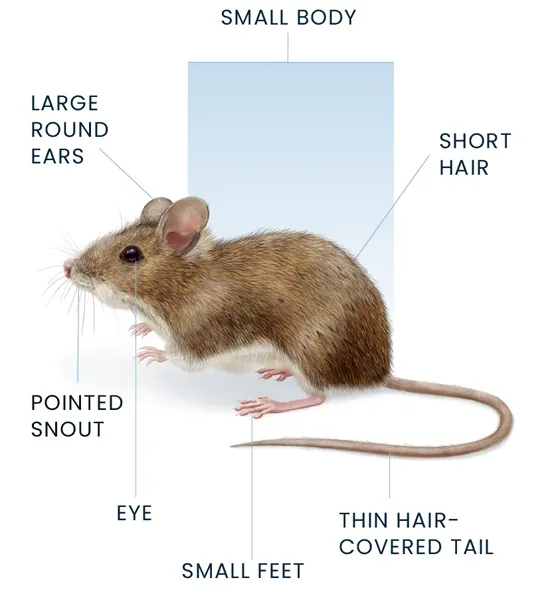
What do mice look like?

Mouse Anatomy Diagram

Deer Mouse

Field Mouse

During the winter months, around 21 million homes in the United States are invaded by mice and other rodents.

Typically, mice seek entry into homes between October and February, searching for food, water, and shelter to escape the cold.

Mice are incredibly agile creatures, able to squeeze through tiny openings.

Their bodies are flexible, allowing them to navigate narrow spaces and escape from potential predators.

Like other rodents, mice have continuously growing incisors.

They gnaw on various materials, such as wood and wires, to keep their teeth from becoming too long. This behavior is crucial for their dental health.

Mice are prolific breeders, with the ability to have several litters of offspring in a single year.

This high reproductive rate allows mouse populations to grow rapidly under favorable conditions.

Mice have a keen sense of smell, which they use to find food and navigate their surroundings.

Their olfactory abilities are essential for survival, helping them detect predators and find suitable habitats.

Mice are primarily nocturnal, meaning they are most active during the night.

This behavior helps them avoid predators and carry out their foraging activities when there is less risk.

Mice are social animals and often live in groups called colonies.

They communicate with each other using a variety of vocalizations, ultrasonic sounds, and scent marking to set up territories and support social bonds within the group.

For in-depth information on these common household invaders, explore our Mice Pest Files—an informative guide covering mouse behavior, health risks, and effective prevention methods.


Pests that can be confused with mice.

Several other pests or animals may be mistaken for mice due to similar signs of activity or presence. Some common examples include rats, voles, hamsters, and gerbils.

Mouse

Rat

Vole

You might already know for sure that you have an mouse problem. Here are a couple of the most common signs of mice infestation.

Small, dark, rice-shaped droppings found in areas where mice frequent, such as along walls, in cupboards, or near food sources.

Evidence of chewing on food packaging, wiring, or structural materials. Mice gnaw to keep their continuously growing incisors in check.

Shredded paper, fabric, or other soft materials used by mice to build nests. Nests may be found in hidden spaces like wall voids or behind appliances.

A distinct, musky odor may be noticeable in areas where mice are active. It is often more apparent in enclosed spaces.

Scratching, rustling, or squeaking sounds, especially at night, may indicate mouse activity within walls, ceilings, or other hiding spots.

Footprints or smudge marks along walls and baseboards, often created by the oils in a mouse’s fur as it moves along surfaces.

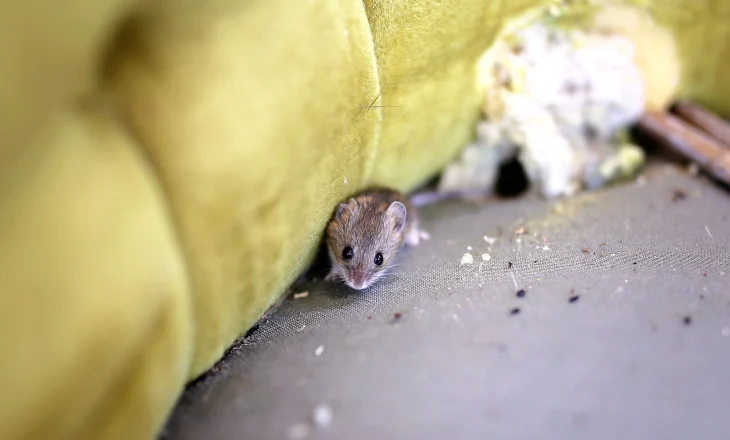
In some cases, especially during the evening, you may see mice moving around. They are generally shy and may quickly retreat to hiding places.

Seal entry points

Clean regularly

Store food properly

Keep garbage sealed

Reduce clutter and clean frequently

Keep yard clean & tidy

People like us.
Pests don't.

4.72 Average | 45,000+ Reviews

Bryan A.

I could not be more pleased with our initial home treatment today! Vincent arrived on time and was extremely thorough in his explanation of the services he performed. He was very polite, respectful of our inside spaces, and had a great attitude throughout the visit. A++ professional! Thank you!

Kayla B.

Overall - very satisfied with communication and job done for my first time ever hiring pest control. Very knowledgeable and explains everything. Makes it very easy to maintain for a super busy family like ours.

Fox Guarantee: We Come Back for Free!

    What type of property do you need help with?

    Are you a current customer?


    By clicking the checkbox, I am providing my eSign signature and consent to Fox Pest Control contacting me at the number above for marketing purposes including through the use of automated technology, SMS/MMS messages, and prerecorded and/or artificial voice messages (including AI generated messaging).  I acknowledge my consent is not required to purchase and I can connect with Fox Pest Control without providing consent by calling 833-667-3785. Message frequency may vary, and message & data rates may apply. Reply 'STOP' to unsubscribe. Reply 'HELP' for help. I also agree to the Fox Pest Control Privacy Policy and Terms of Use.

    Fox Pest Control technician talking to female customer

    Mouse FAQs

    What do mice eat?

    Mice are omnivores and eat a variety of foods, including grains, seeds, fruits, and even small insects. They are opportunistic feeders and can adapt their diet to whatever food is available. But you don’t need another mouth to feed! Call Fox Pest Control and let us get rid of mice for you. Our Home Protection Plan includes mice and other common household pests, which means you get year-round treatment for year-round peace of mind. Contact us today!

    How long do mice live?

    In the wild, the average lifespan of a mouse is about 6 months to 1 year due to predators and environmental factors. However, in protected environments, such as homes, they can live up to 2 years. No matter how long they live, you don’t want them moving in with you! Call Fox Pest Control today for a free inspection. Let us help you get rid of unwanted guests!

    What damages do mice cause?

    Mice can cause damage by gnawing on things like furniture, walls, toys, wiring, and insulation. They may contaminate food with their droppings and urine, and their constant gnawing can lead to potential fire hazards if they damage electrical wiring.

    If you’re worried about mice causing damage in your home, contact Fox Pest Control today! We’ll help protect your home, so you don’t have to worry.

    Are mice dangerous?

    Yes, mice can be dangerous as they may carry and transmit diseases, such as Hantavirus, Salmonella, and Leptospirosis. They also pose a threat to property by causing structural damage. Let Fox Pest Control protect your family. Our Home Protection Plan takes care of mice and gives you year-round protection from pests. We guarantee that if they come back, so will we – free of charge. Call now!

    How did I get mice in my house?

    Mice can enter homes through small openings, gaps, or cracks in walls, doors, and windows. They may also hitch a ride on items brought into the home or enter through gaps in utility lines. With our Home Protection Plan, the treatments build a barrier around your home so that pests can’t get in. Every treatment increases the effectiveness against threats to your home and family. Contact Fox Pest Control today!

    Can mice fit through small spaces?

    Yes, mice can fit through very small openings, as they have flexible bodies and can squeeze through gaps as small as a quarter of an inch. This ability makes it challenging to completely mouse-proof a structure. With our Home Protection Plan, the treatments build a barrier around your home so that pests can’t get in. Every treatment increases the effectiveness against threats to your home and family. Contact Fox Pest Control today!

    What’s the difference between mice and rats?

    While mice and rats are both rodents, they have differences in size, body structure, and behavior. Rats are generally larger with a bigger body and a longer tail compared to mice. The head and feet of rats are also proportionally larger than those of mice. Our Home Protection Plan protects your home against both rats and mice. Every treatment increases the effectiveness against threats to your home and family. Contact Fox Pest Control today!