Free Inspections & EstimatesSame Day Service
Evict voles from your yard.
Feel comfortable in your home. Let Fox Pest Control take care of your vole problem.
Same Day Service
Free Inspections & Estimates
Satisfaction Guaranteed

To ensure our customers’ safety, all Fox Pest Control technicians undergo a thorough screening process and complete extensive classroom training, along with ongoing on-the-job mentoring with an experienced technician.
Voles are tiny rodents that love to dig, creating both surface and underground tunnels in your yard. Their extensive tunnel systems can cause damage to your lawn, garden, and even crops. At Fox Pest Control, we know how to get rid of voles in your yard, so you can get back to enjoying the outdoors. Give us a call today to see if we offer vole services in your area. Plus, you can learn more about these interesting little rodents below!
Call Fox Pest Control today for a free inspection: (855) 953-1976.
Call before 2 pm and get same-day service.
Remote locations and other conditions may require next-day service.
A certified technician will inspect your property and provide customized pest control treatment based on their findings.
Each service provides a detailed report and helpful tips to keep pests away. We return regularly throughout the year, increasing protection with every visit.
Everything you never wanted to know about voles.

Hamilton Allen Ph.D., BCE
Certified Entomologist, Fox Pest Control
Size: 5-8 inches
Number of legs: 4
Wings: no
Bites or stings: no
Color: brown or gray
Carry disease: yes
Damages home/yard: yes
Most active season: year-round
Fox plan for this pest: Home Protection Plan/Specialty Plan

Had it with voles?
Call now and get $50 off pest control.
Call before 2pm and get same-day service.
A single female vole can have 1-5 litters each year, with each litter typically having 3-6 young voles, but sometimes as many as 11 babies! They can have a litter every 35-40 days.
They consume a wide variety of vegetation, including grasses, roots, bulbs, seeds, and crops like potatoes and carrots.
They create intricate surface and underground tunnel systems for nesting and foraging. These tunnels can extend for several feet and provide shelter from predators and harsh weather conditions.
These include owls, hawks, foxes, snakes, and even domestic cats. Their abundance and high reproductive rate make them a vital part of the food chain in many ecosystems.
Some species sporting lighter coats in the winter for better camouflage in snow-covered environments.
For a deeper understanding of these burrowing rodents, visit our Vole Pest Files—a comprehensive resource detailing their habits, the damage they cause to landscapes, and effective methods for identification and control.

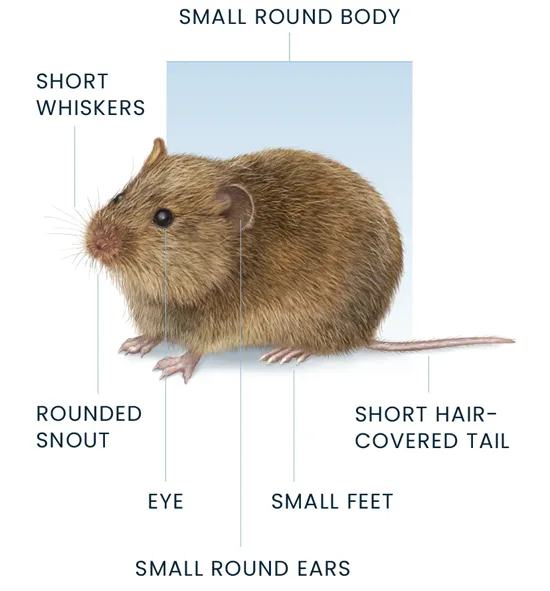
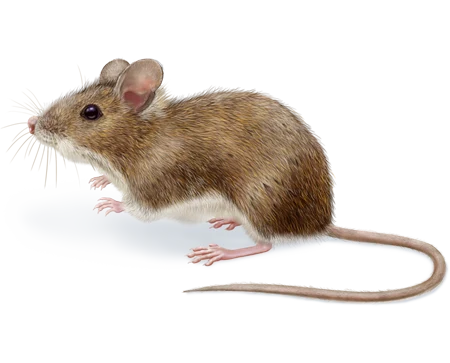
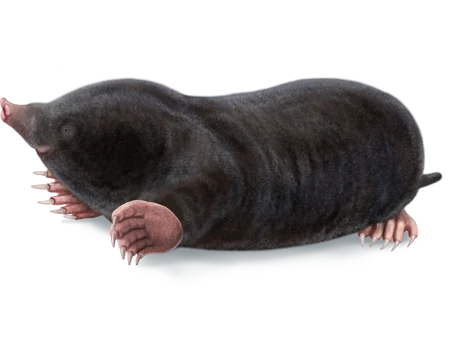
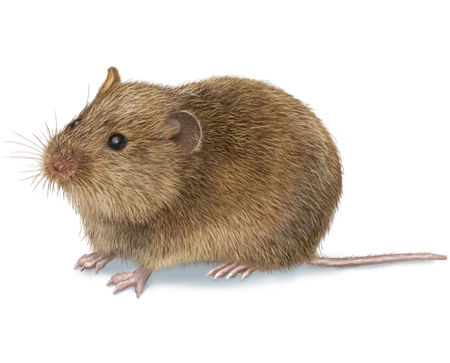
Voles are often mistaken for mice and are sometimes even called meadow mice, but they are different rodents. Sometimes, people mistake voles for moles, as well, but moles are not rodents and are much bigger.

Field Mouse

Mole

Vole
You might already know for sure that you have an vole problem. Here are a couple of the most common signs of vole infestation.
Voles create an extensive network of surface tunnels, which are visible, and underground tunnels, which can sometimes be detected by gently probing the soil with a stick or shovel.
Look for small, round openings in the ground, often hidden beneath vegetation or debris, which lead to the voles’ underground tunnels and nesting chambers.
Voles gnaw on the bark of trees, shrubs, and other plants near ground level, leaving distinct tooth marks that can cause damage to the vegetation.
Voles consume a variety of plants, so evidence of gnawed or damaged vegetation, including grasses, roots, bulbs, and garden crops, may indicate their presence.
Keep grass cut short
Encourage natural predators
Remove food sources
Regular yard maintenance
4.72 Average | 45,000+ Reviews
We’re so sure you’ll love our service, we guarantee it. If you spot any pests included in your plan, just give us a call. We’ll come back until the pests don’t.
Send us a message using the form below, or just give us a call at (855) 953-1976.