Free Inspections & EstimatesSame Day Service

Get Cicada Killer Control Near You

Conquer the cicada killers.

Feel comfortable in your home. Let Fox Pest Control take care of your cicada killer problem.

Same Day Service

Free Inspections & Estimates

Satisfaction Guaranteed

Fox Pest Control technician inspecting kitchen for pests

Fox techs are experts at evicting your tiny tenants.

To ensure our customers’ safety, all Fox Pest Control technicians undergo a thorough screening process and complete extensive classroom training, along with ongoing on-the-job mentoring with an experienced technician.

The easiest way to get rid of cicada killers.

Are cicada killers making your yard their hangout spot? Don’t worry—Fox Pest Control has you covered! We’re pros at cicada killer control and know exactly how to deal with these large, intimidating wasps. With our expert treatments, we’ll make your outdoor space safe again. Our Home Protection Plan ensures you and your family can enjoy your yard without the unwelcome visitors.

1

Schedule with Fox

Call Fox Pest Control today for a free inspection: (855) 953-1976.
Call before 2 pm and get same-day service.

Remote locations and other conditions may require next-day service.

2

Treatment

A certified technician will inspect your property and provide customized pest control treatment based on their findings.

3

Follow Up

Each service provides a detailed report and helpful tips to keep pests away. We return regularly throughout the year, increasing protection with every visit.

Hamilton Allen Ph.D., BCE

Certified Entomologist, Fox Pest Control

Cicada Killer Facts


Size: 1 – 2 inches
Number of legs: 6
Wings: 2 pairs
Bites or stings: yes
Color: black with yellow
Carry disease: no
Damages home/yard: no
Most active season: summer
Fox plan for this pest: Home Protection Plan

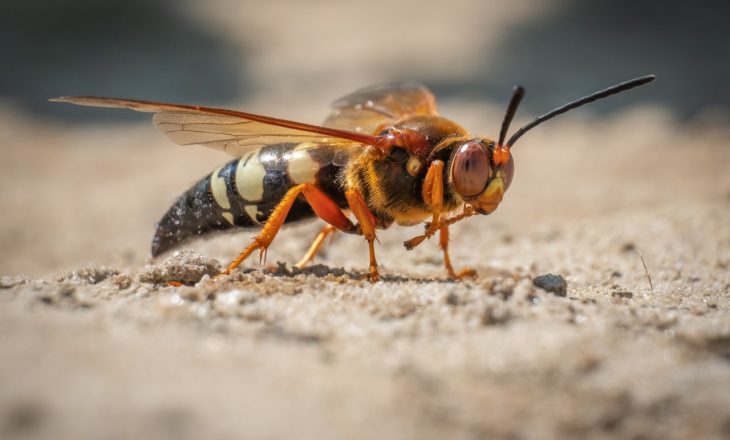
What do cicada killers look like?

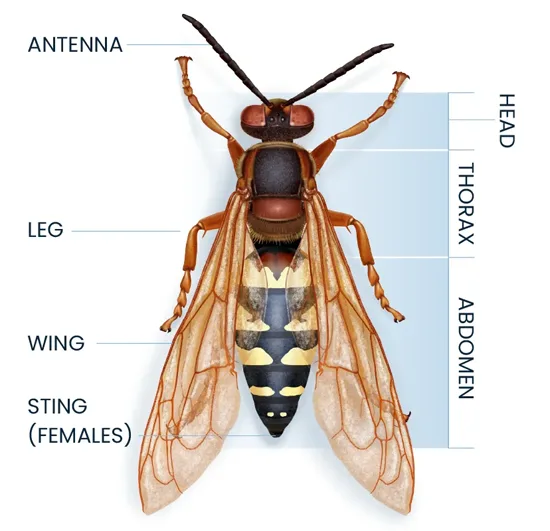
Cicada Killer Anatomy Diagram

Cicada killers are large, solitary wasps.

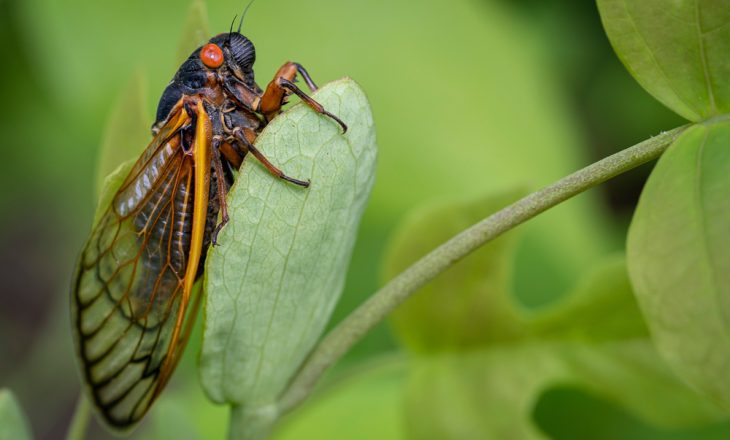
They are commonly known for their habit of hunting cicadas. Female cicada killers capture cicadas, paralyze them with venom, and then carry them back to their underground burrows, where they lay eggs on the paralyzed cicadas. The developing larvae feed on the cicadas once they hatch. Cicada killers are generally not aggressive towards humans unless provoked, as their primary focus is on hunting cicadas for reproduction.

Cicada killers are one of the largest species of solitary wasps.

Females reach lengths of up to 2 inches (5 centimeters) long. Their large size makes them quite imposing, but they are generally not aggressive toward humans.

Cicada killers excavate elaborate burrows in sandy or loose soil.

They often creating tunnels that extend several inches below the ground. These burrows serve as nesting sites for females to lay eggs and provide food for their offspring.

Despite their intimidating appearance, cicada killers are beneficial in helping to control cicada populations.

By hunting and consuming cicadas, they help regulate the population of these insects, which can sometimes cause damage to trees and shrubs during their feeding activities.

Cicada killer wasps may nest in groups called aggregations.

Aggregations are several nests in the same area, but cicada killers do not live together socially like social bees and wasps. These aggregations can range from a few to around a hundred individual burrows and may remain in the same spot for multiple years. Female cicada killers dig burrows in well-drained soil, with each burrow having an opening of about 1 1/2 inches leading to a tunnel that extends 12-18 inches deep. They create nursery cells off the main tunnel, sometimes with secondary tunnels, allowing them to rear up to 16 larvae in a burrow.


Pests that can be confused with cicada killers.

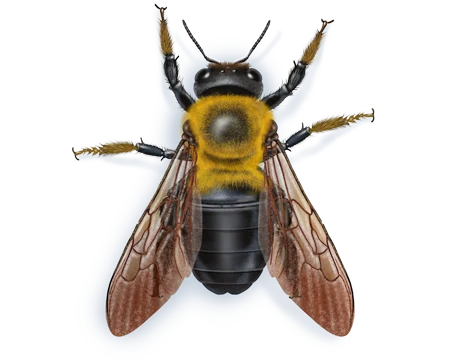
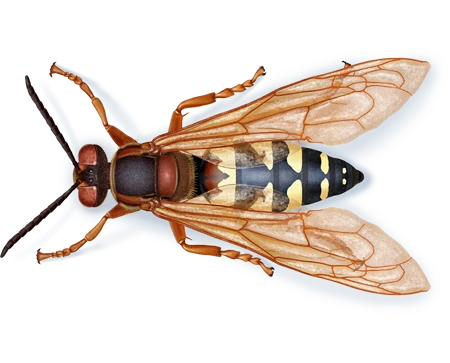
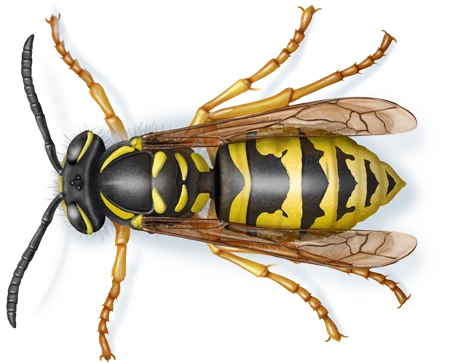
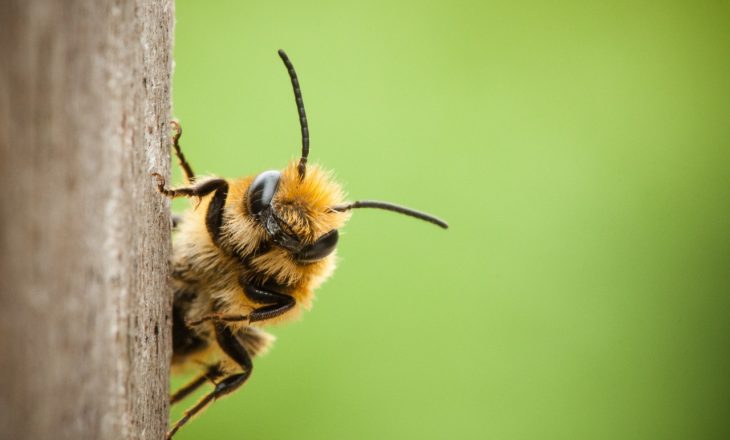
People often confuse cicada killers with other large, solitary wasps or carpenter bees, although they have distinct physical characteristics and behaviors.

Carpenter Bee

Cicada Killer

Wasp

You might already know for sure that you have an cicada killer problem. Here are a couple of the most common signs of an infestation.

Cicada killers create burrows in the ground, typically in sandy or loose soil. Look for large, round holes resembling the size of a quarter to a half-dollar coin.

As cicada killers dig their burrows, they push soil out of the entrance, creating small mounds or piles of excavated soil nearby.

Keep an eye out for large, solitary wasps flying low to the ground, particularly near areas with burrows or where cicadas are present.

Cicada killers hunt cicadas as food for their larvae. If you notice an abundance of cicadas in your area, it could attract cicada killer wasps.

Seal entry points

Water regularly — they prefer dry soil or sand

Cover bare soil or sand

People like us.
Pests don't.

4.72 Average | 45,000+ Reviews

Bryan A.

I could not be more pleased with our initial home treatment today! Vincent arrived on time and was extremely thorough in his explanation of the services he performed. He was very polite, respectful of our inside spaces, and had a great attitude throughout the visit. A++ professional! Thank you!

Kayla B.

Overall - very satisfied with communication and job done for my first time ever hiring pest control. Very knowledgeable and explains everything. Makes it very easy to maintain for a super busy family like ours.

Fox Guarantee: We Come Back for Free!

    What type of property do you need help with?

    Are you a current customer?


    By clicking the checkbox, I am providing my eSign signature and consent to Fox Pest Control contacting me at the number above for marketing purposes including through the use of automated technology, SMS/MMS messages, and prerecorded and/or artificial voice messages (including AI generated messaging).  I acknowledge my consent is not required to purchase and I can connect with Fox Pest Control without providing consent by calling 833-667-3785. Message frequency may vary, and message & data rates may apply. Reply 'STOP' to unsubscribe. Reply 'HELP' for help. I also agree to the Fox Pest Control Privacy Policy and Terms of Use.

    Fox Pest Control technician talking to female customer

    Cicada Killer FAQs

    Do cicada killers sting?

    Yes, female cicada killers can sting, but it is rare and usually only if they feel threatened. Their stings are not particularly dangerous to humans but can cause pain and discomfort, like bees or wasp stings. Male cicada killers don’t even have stingers.

    Are cicada killers dangerous?

    Cicada killers are not considered dangerous to humans because they are not aggressive and usually avoid conflict. While their stings can be painful, they are generally not harmful unless a person is allergic to their venom.

    What are cicada killers?

    Cicada killers are large, solitary wasps. They are known for hunting cicadas as food for their offspring. People are often frightened by these wasps, as they are quite impressive in size, with females reaching lengths of up to 2 inches long. However, they are generally not aggressive and rarely sting.

    Are cicada killers aggressive?

    Cicada killers are not aggressive toward humans, do not have nest-guarding instincts, and generally avoid confrontation. While they may appear intimidating due to their size, they are primarily focused on hunting cicadas for their offspring rather than seeking out conflicts with humans.

    What do cicada killers eat?

    Adult cicada killer wasps primarily consume nectar and plant juices for sustenance. Female cicada killer wasps hunt cicadas and other insects, immobilizing them with stings. Subsequently, the females transport their prey to their underground burrows, using them as nourishment for their offspring once they hatch.

    Do cicada killers eat cicadas?

    Yes and no. Adult cicada killers do not eat cicadas. They mostly eat nectar and plant juices. However, they hunt cicadas as food for their offspring, paralyzing them with venom before carrying them back to their burrows to provide nourishment for their larvae.