Free Inspections & EstimatesSame Day Service

Get Honey Bee Control Near You

Keep honey bees sweet and safe.

Feel comfortable in your home. Let Fox Pest Control take care of your honey bee problem.

Same Day Service

Free Inspections & Estimates

Satisfaction Guaranteed

Fox Pest Control technician inspecting kitchen for pests

Fox techs are experts at evicting your tiny tenants.

To ensure our customers’ safety, all Fox Pest Control technicians undergo a thorough screening process and complete extensive classroom training, along with ongoing on-the-job mentoring with an experienced technician.

The easiest way to get rid of honey bees.

Bees are incredible little creatures, and we need them for important things like pollination. But for those allergic to their stings, they can be more than a little scary. At Fox Pest Control, we’re experts in dealing with yellow-striped pests—but when it comes to removing honeybee hives, we leave that job to the beekeeping professionals. Not sure what kind of insect is buzzing around your home? Give us a call for a free inspection! If honeybees are the culprit, we’ll check things out and let you know the best solution. Sometimes we can help, and other times we’ll recommend a local beekeeper to safely relocate the bees. We’re experts in stinging insect removal and ready to help you take back your yard. Call us today!

1

Schedule with Fox

Call Fox Pest Control today for a free inspection: (855) 953-1976.
Call before 2 pm and get same-day service.

Remote locations and other conditions may require next-day service.

2

Treatment

A certified technician will inspect your property and provide customized pest control treatment based on their findings.

3

Follow Up

Each service provides a detailed report and helpful tips to keep pests away. We return regularly throughout the year, increasing protection with every visit.

Hamilton Allen Ph.D., BCE

Certified Entomologist, Fox Pest Control

Honey Bee Facts


Size: ⅝ inch to 1 ½ inch
Number of legs: 6
Wings: 4
Bites or stings: yes
Color: yellow/orangish-brown with black
Carry disease: no
Damages home/yard: yes
Most active season: spring, summer, fall
Fox plan for this pest: Home Protection Plan / referral to local beekeeper

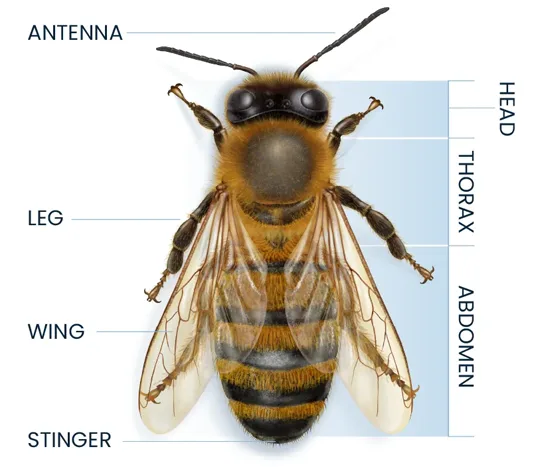
What do honey bees look like?

Bee Anatomy Diagram

Honey bees are incredibly important pollinators.

They pollinate flowers, fruits, and vegetables, as well as agricultural crops and wild plants. They transfer pollen from one flower to another while foraging for nectar, promoting plant reproduction and biodiversity.

A honey bee colony is a highly organized cooperative society.

It is made up of thousands of individual bees living together in a single hive. Each colony typically consists of three main types of bees: the queen bee, worker bees, and drones.

  • Queen Bee: The queen bee is the largest in the colony and is responsible for laying eggs. She is the only reproductive female in the colony and can lay up to 2,000 eggs per day during the peak of the breeding season. The queen emits pheromones that control the behavior and development of the other bees in the colony.
  • Worker Bees: Worker bees are female bees that perform a variety of tasks essential for the colony’s survival. These include hunting for nectar and pollen, caring for the queen and developing brood, building and supporting the hive, and defending the colony against predators. Worker bees are sterile and do not lay eggs.
  • Drones: Drones are male bees whose primary role is to mate with queens from other colonies. They do not have stingers and do not participate in colony activities such as foraging or caring for the brood. Drones are typically expelled from the hive during winter when resources are scarce.

Worker bees produce a special treat for the queen bee called royal jelly.

This highly nutritious substance is rich in proteins, vitamins, and hormones. While all bee larvae initially consume royal jelly, only queen bee larvae are fed exclusively with it throughout their development. This special diet causes physiological changes in queen bee larvae, developing them into reproductive females with longer lifespans and larger bodies.

When a bee discovers a good food source, it shares the news with other bees back at the hive through the “waggle dance.”

This dance has two parts: a fast back-and-forth movement called the waggle phase and a loop that forms a sort of figure-eight shape. The bee might do this dance anywhere from 1 to 100 times. The direction and how many times it loops around gives the other bees information about where the food is, how far away it is, and how big it is.


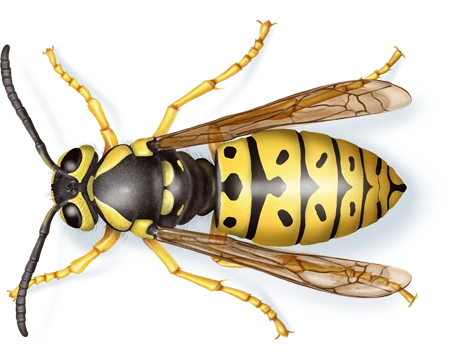
Pests that can be confused with honey bees.

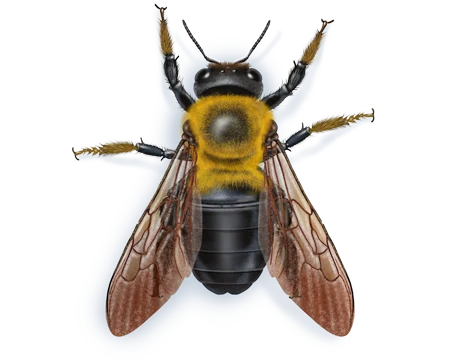
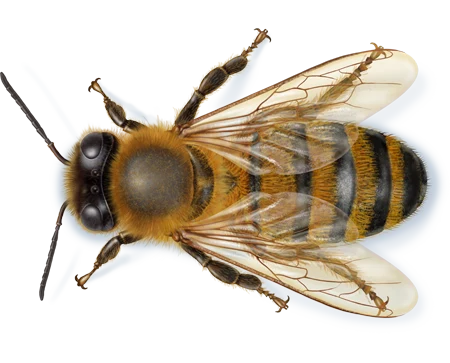
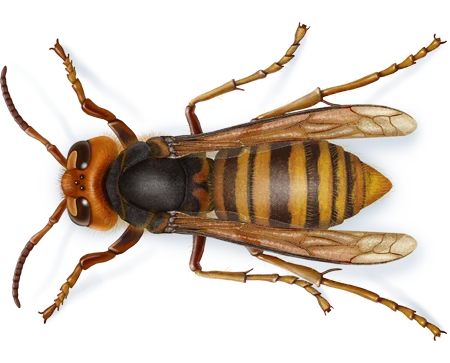
People often confuse honey bees with bumblebees, carpenter bees, yellowjackets, and hornets, but they have distinct physical characteristics and behaviors.

Carpenter Bee

Honey Bee

Hornet

Yellowjacket

You might already know for sure that you have an honey bee problem. Here are a couple of the most common signs of an infestation.

If you notice a significant increase in honey bee activity around your property, such as large numbers of bees flying in and out of a particular area, it could indicate the presence of a nearby hive.

Look for the physical presence of a honey bee hive or nest. Hives are commonly found in protected or sheltered areas, such as wall voids, hollow trees, attics, or crawlspaces.

You may hear buzzing sounds coming from within walls, ceilings, or other enclosed spaces where honey bees have established their hive.

In some cases, you may find traces of beeswax or honey near the hive site, especially if the hive is located indoors and honey is leaking or seeping through walls or ceilings.

Dark patches on your walls or ceilings could mean bees have built a nest inside your home. The honey production process leaves behind dark stains. When coupled with increased bee activity around your property, it’s a clear sign of infestation.

Pets may unknowingly disturb bee colonies by investigating hives or chasing bees. Bees will defend their colony, resulting in potential injuries from bee stings. Pets are most vulnerable to stings on their faces and paws, and ingesting a bee can lead to stings in the mouth or throat.

Seal entry points

Avoid nest disturbance

Consult with beekeeper

Dispose of garbage properly

Caution around flowers

Remove fallen fruit and vegetables

People like us.
Pests don't.

4.72 Average | 45,000+ Reviews

Bryan A.

I could not be more pleased with our initial home treatment today! Vincent arrived on time and was extremely thorough in his explanation of the services he performed. He was very polite, respectful of our inside spaces, and had a great attitude throughout the visit. A++ professional! Thank you!

Kayla B.

Overall - very satisfied with communication and job done for my first time ever hiring pest control. Very knowledgeable and explains everything. Makes it very easy to maintain for a super busy family like ours.

Fox Guarantee: We Come Back for Free!

    What type of property do you need help with?

    Are you a current customer?


    By clicking the checkbox, I am providing my eSign signature and consent to Fox Pest Control contacting me at the number above for marketing purposes including through the use of automated technology, SMS/MMS messages, and prerecorded and/or artificial voice messages (including AI generated messaging).  I acknowledge my consent is not required to purchase and I can connect with Fox Pest Control without providing consent by calling 833-667-3785. Message frequency may vary, and message & data rates may apply. Reply 'STOP' to unsubscribe. Reply 'HELP' for help. I also agree to the Fox Pest Control Privacy Policy and Terms of Use.

    Fox Pest Control technician talking to female customer

    Honey Bee FAQs

    Do honey bees sting?

    Yes, but only the worker bees can sting you. Male honey bees, called drones, do not have stingers, so they cannot sting. Honey bees are not naturally aggressive and will usually only sting in defense of themselves or their hive when they feel threatened.

    Are honey bees endangered?

    Honey bees are facing a lot of problems, such as losing their homes, being exposed to pesticides, getting sick from parasites and diseases, and dealing with climate change. Some groups of honey bees are decreasing in numbers, especially in certain places, but they’re not considered endangered right now. However, because honey bees are super important for pollinating crops and plants, their decline is concerning. People are working on ways to protect honey bees, like being careful with pesticides and using sustainable beekeeping methods.

    If you see a honey bee nest on your property, the best thing to do is to call a beekeeper to help you relocate the hive. Don’t try to do so yourself, as bees become defensive, and you could be stung.

    How do I find a good honey bee removal service?

    If you find yourself with a yellow-striped flying insect and you’re not sure what it is, call Fox Pest Control. We’ll identify the pest, and if it’s something we treat, we’ll take care of you. If it’s honey bees that you are dealing with, we’ll refer you to a local honey bee removal expert who follows state regulations.

    Does Fox Pest Control treat honey bees?

    Currently, none of our branches treat honey bees or remove their nests. Since they are a protected species in many states across the country, we rely on honeybee removal experts in many cases. If you’re not sure if you have honey bees or another type of stinging insect, call Fox Pest Control and we’ll come out and identify the pest.

    Are honey bees aggressive?

    Honey bees are generally not aggressive unless they feel threatened, or their hive is disturbed. Because honey bees will die if they sting, they will usually only sting if they perceive a threat to themselves or their colony. Honey bees typically focus on foraging for food and caring for their young rather than seeking out conflicts with humans or other animals.

    Do honey bees die after stinging?

    Honey bees have a unique defense mechanism: a barbed stinger connected to their abdomen. When a honey bee stings, it releases venom through this stinger. However, unlike other stinging insects such as wasps or hornets, the honey bee’s stinger becomes lodged in the victim’s skin, tearing away from the bee’s body as it tries to fly off. Unfortunately, this results in the bee’s death shortly afterward. Because of this, honey bees typically only sting when they perceive a significant threat to themselves or their colony, as it ultimately results in the loss of their own life.

    How fast can honey bees fly?

    Honey bees can fly around 15 miles per hour (24 kilometers per hour), and its wings beat 230 times every second! However, their flight speed can vary depending on weather conditions, wind speed, and the individual bee’s energy level. They fly much faster if they don’t carry nectar, pollen, or water.

    How long do honey bees live?

    Honey bee eggs hatch within three days, developing into larvae, then pupae. Queens reach adulthood fastest, maturing fully in just 16 days, followed by workers in 21 days, and drones taking the longest at 24 days.

    • Worker bees typically live for about two to four weeks in the summer, but those born late and overwinter as part of the hive can live for up to 11 months, known as diutinus or “long-lasting” bees.
    • Drones live for four to eight weeks in the summer, dying shortly after mating, and are not kept in the hive during winter.
    • Queens have the longest lifespan, usually living for two to three years, with some living up to five years.

    How do honey bees survive the winter?

    As the weather gets colder, all the bees in the hive gather together and vibrate their abdomens to make warmth. A few bees will die, even in a strong hive, but native bees are well-equipped to survive the winter.