Welcome to Fox Pest Control’s ultimate guide on boxelder bugs! While they’re mostly harmless, boxelder bugs can be a nuisance—especially when they start gathering in large numbers around your home. Let’s break down everything you need to know about these bugs, from what they eat to how to keep them out of your house.
What Do Boxelder Bugs Look Like?
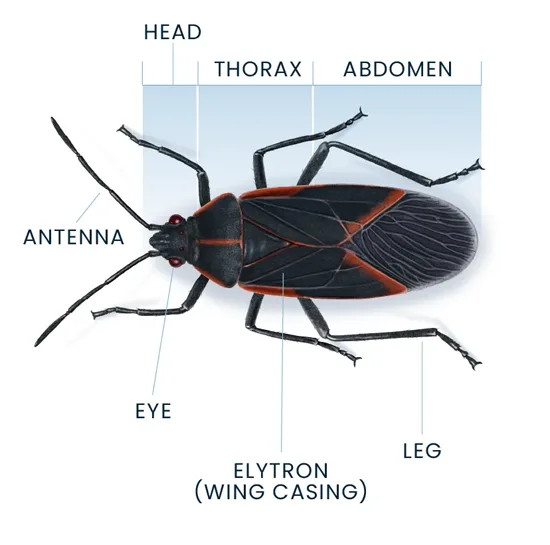
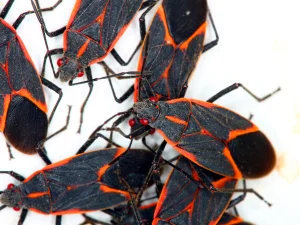
Boxelder bugs are pretty distinctive once you know what to look for. They’re about ½ inch long, with a flat, oval-shaped body and six legs. Their bodies are mostly black, but they have striking red or orange markings along the edges of their wings and behind their heads. These bright markings make them easy to spot, especially when they gather in clusters. They have six legs and two antennae. Under their wings, the abdomen is bright red.
If you see a black bug with these red lines, especially around trees or sunny spots on your home, it’s likely a boxelder bug! Now, there are a few other insects that look very similar, and they’re not so harmless, but we’ll get to that in a bit.
What in the World Are Boxelder Bugs?
Boxelder bugs are part of a group of insects called “true bugs.” They got their name because they have a habit of feeding on female boxelder trees. They’ll suck the sap from the leaves, seeds, and young branches. When there are a lot of them around, they may also feed on ash and maple trees and sometimes even fruits like raspberries and strawberries.
Boxelder bugs don’t really harm plants, but they can be annoying for homeowners. In the fall, they gather in big groups on the sunny side of houses, trying to find a warm place to spend the winter. When they group up like this, they’re often called an “intrusion” or just a “nuisance” because they tend to crowd together, especially as the weather gets colder.
Where Do Boxelder Bugs Live?
Boxelder bugs can be found in most parts of the United States, especially in areas with boxelder, maple, or ash trees. They’re super common in the central and western states, where boxelder trees naturally grow, but you can spot them in neighborhoods and parks all over the country. You’re less likely to see them in really cold places like Alaska or super hot deserts, but otherwise, they’re just about everywhere!
There are two types of boxelder bugs in North America:
- Common Boxelder Bug (Boisea trivittata): This is the one most people see around their homes and near boxelder trees.
- Western Boxelder Bug (Boisea rubrolineata): This type lives mainly in the western parts of the U.S. and Canada.
These two types look pretty similar and act the same way—they both like to hang around trees and homes when it starts to get cold.
A Boxelder Bug by Any Other Name…
People have a few different names for boxelder bugs, especially since they’re such a common sight around homes in the fall. Here are some of the nicknames they’re known by:
- Box Elder Beetles – Even though they’re not actually beetles, some people refer to them this way because of their shape and color.
- Maple Bugs – Several areas have adopted this nickname because boxelder bugs are also attracted to maple trees.
- Democrat Bugs – In some regions, especially in the Midwest, people call them this because of the way they “congregate” in large groups.
- Garage Bugs – Since boxelder bugs often make their way into garages, this nickname also pops up occasionally.
- Zebra Bugs – Because of their red and black markings, some people give them this zebra-inspired name.
No matter what you call them, they’re the same red-and-black bugs that love to gather in groups, especially when it’s time to find a cozy winter hiding spot!
Do Boxelder Bugs Bite or Sting?
The short answer is no, for all of the above. But let’s talk a little more about each of these questions.
Boxelder bugs don’t bite or sting humans or pets. They have mouth parts designed to pierce plants and suck out sap, but these mouth parts aren’t strong enough to break human skin. They’re strictly plant-eaters and don’t show any interest in biting people or animals. So, even if they’re crawling around, there’s no need to worry about getting bitten!
What About Property Damage?
Boxelder bugs don’t chew, burrow, or nest in materials like wood, fabric, or insulation, which means they won’t damage walls, furniture, or structural materials in your home. Unlike termites or carpenter ants, they don’t have any impact on the structure of the home itself.
The main issue with boxelder bugs inside your house is that they can get into small cracks and crevices. They like to hide in walls, attics, or light fixtures to keep warm, and this can create a bit of a mess if they die in these areas. They’re also known to get up under the siding of homes and hide out. In rare cases, large numbers of boxelder bugs could stain light-colored walls or fabrics slightly with their bodies, but they’re not destructive in the way some other pests are.
And They Don’t Spread Disease?
Nope. Boxelder bugs are about as harmless as they come when it comes to spreading diseases. They don’t carry any pathogens or parasites that can infect humans or animals. Unlike flies, mosquitoes, or ticks, they don’t come into contact with anything that could make people sick, so they don’t pose a health risk.
So, Then Why Are Boxelder Bugs Considered a Nuisance?
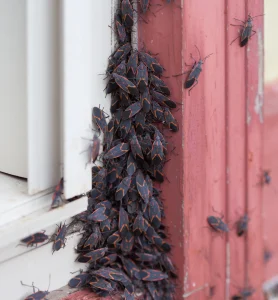
The real trouble with boxelder bugs is how they gather in such large numbers, especially in the fall when they’re looking for a warm spot to spend the winter. Here’s why they can be a nuisance:
- Large Clusters: They tend to gather in big groups on the sunny side of buildings, usually on walls or around windows. The sight of so many bugs can be unsettling, especially if they start getting inside.
- Indoor Invaders: When they do find a way into your home, they often gather in places like attics, wall voids, basements, or even behind picture frames. Once inside, they stay pretty hidden during winter but might start moving around on warmer days, which can be a surprise.
- Odor and Staining: Boxelder bugs don’t have a strong smell, but if they’re crushed, they can release a slightly unpleasant odor. Plus, if large numbers die inside walls or other confined spaces, they could potentially leave a stain, especially on light-colored walls or curtains.
Have a boxelder bug problem that needs fixing?
Life Cycle of Boxelder Bugs
The life cycle of boxelder bugs is pretty simple and interesting. Like most insects, these little guys, go through three main stages: egg, nymph, and adult. Let’s break it down to see how they grow from tiny eggs to full-grown bugs!
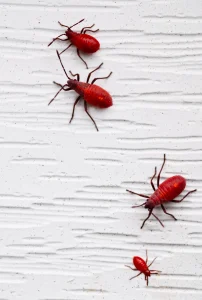
- Egg Stage: Boxelder bugs begin their lives as tiny eggs. In the spring, female boxelder bugs lay their eggs in clusters on the bark of boxelder trees, often on the warm trunks and branches. The eggs are small, rusty red, and shaped like little beans. Within about a week, the eggs hatch, and the warmer spring weather is the perfect time for this, as it provides plenty of food for the new nymphs to grow strong.
- Nymph Stage: Once the eggs hatch, the baby boxelder bugs, called nymphs, emerge. Nymphs look like mini versions of adult boxelder bugs, but they’re smaller and a bit different in color. They’re bright red at first and don’t have wings yet. Over the next few weeks, the nymphs grow and go through several “molts.” Molting is when they shed their old skin to make room for a larger body underneath. Each time they molt, they look more and more like adults, getting darker and developing the black markings on their backs.
During the nymph stage, they start feeding on the seeds, leaves, and sap of boxelder trees to get the nutrients they need to keep growing. Nymphs are usually around all summer, busy eating and growing! - Adult Stage: By late summer, the nymphs have molted enough times to become full-grown adults. Now, they have wings and the familiar black body with red or orange markings on their back. Adult boxelder bugs are ready to mate, which means they’ll start the cycle all over again by laying more eggs on boxelder trees.
But here’s where things get interesting: in the fall, adult boxelder bugs start looking for a warm place to spend the winter. They’re not active during the cold months, so they go into a kind of hibernation. That’s when you might see them clustering on the sunny side of buildings or trying to sneak under your siding or into your warm home through tiny cracks. They’re just looking for a cozy spot to stay safe until spring returns.
Life Cycle Summary
The entire boxelder bug life cycle takes about one year. In the spring, new eggs are laid and hatch into nymphs. The nymphs grow through the summer, eventually becoming adults. These adults survive the winter by hiding out, then emerge in the spring to start the cycle all over again.
Boxelder bugs might seem annoying when they gather on our homes, but they’re just trying to find a place to rest up for winter so they can continue their life cycle the following year!
Life as an Adult Boxelder Bug
Boxelder bugs don’t have a caste system or specific roles within their groups, like ants, bees, or termites do. In those types of insect colonies, you’ll find highly organized societies with different roles, like queens, workers, and soldiers, all working together to support their colony. Boxelder bugs, however, are much simpler in their social structure.
Each boxelder bug lives pretty independently and takes care of its own survival. They don’t have a queen or any specific “jobs” they perform for a group. Instead, they gather in large numbers mostly for warmth and shelter, especially as they search for cozy winter hiding spots. When they cluster together, it’s more for convenience than for a particular role or organized purpose.
During their lives, each boxelder bug will feed, grow, molt, and eventually reproduce if it’s an adult, but that’s about the extent of their responsibilities. They don’t coordinate tasks or work together to build nests or find food; each bug is essentially out for itself!
Do Boxelder Bugs Hibernate?
Yes and no. They don’t actually “hibernate” in the traditional sense, like bears or frogs, but they do slow down their activity and wait out the winter in a cozy spot until the warmer spring weather returns. Instead of going into a deep, long-term hibernation, boxelder bugs enter a state of dormancy during the colder months, usually in late fall and winter.
As the weather cools, adult boxelder bugs start looking for warm places to hide, like cracks in your home, under siding, or inside walls. This is when you might notice them clustering in large groups around your home’s exterior or even sneaking indoors. When temperatures rise again, they wake up, become active, and start feeding on trees and plants once more.
Mistaken Identities: Boxelder Bug Lookalikes
Boxelder bugs often get mistaken for other insects that look similar, especially those with black and red markings or similar body shapes. One common mix-up is with firebugs. These insects also sport bright red and black markings, but firebugs are typically found in Europe, not North America. While they look alike, firebugs have a slightly different body shape and tend to be smaller.
People sometimes mistake milkweed bugs for boxelder bugs because they look quite similar, especially in their color patterns. Both are “true bugs” and share the same basic shape, with black bodies and red or orange markings. There are a few differences that will help you know which insect you’re looking at.
- Milkweed Bugs: These guys tend to be smaller and have a more distinct black pattern on their bodies with some orange on their wings. They are typically around ½ inch long.
- Boxelder Bugs: Boxelder bugs are usually a bit bigger and more oval-shaped compared to milkweed bugs. They often feed on boxelder trees and other maples or ashes, rather than milkweed.
While both bugs have similar colors and body shapes, the main difference is where they like to live and feed. So, if you find a bug on a milkweed plant, it’s probably a milkweed bug, but if it’s on a tree like a boxelder, it’s more likely a boxelder bug.
Kissing Bugs vs. Boxelder Bugs: How to Tell Them Apart
Kissing bugs and boxelder bugs might look similar, but they are very different when it comes to health risks. Kissing bugs can carry Chagas disease, which can be passed to humans through their bite. Boxelder bugs, on the other hand, don’t bite people and don’t carry diseases. Here’s how to tell the difference:
- Size and Shape: Boxelder bugs are smaller and more oval-shaped (about ½ inch long), while kissing bugs are bigger (up to 1.5 inches) and have a more elongated body with a triangular shield behind their heads.
- Color: Boxelder bugs are black with bright red or orange markings. Kissing bugs are usually brown or gray with less vivid reddish or orange markings. Kissing bugs have black eyes, while boxelder bugs have red eyes.
- Mouthparts: Kissing bugs have a long, needle-like mouth part for biting and feeding on blood. Boxelder bugs don’t bite people—they feed on plant sap.
- Behavior: Boxelder bugs mostly eat plants and gather in groups during the fall to find a warm place to stay. Kissing bugs are attracted to warm-blooded animals and are more likely to bite at night, especially around the face.
While boxelder bugs are mostly harmless, kissing bugs can carry diseases, so it’s important to know the difference. If you’re worried about kissing bugs around your home, Fox has the boxelder control solution you need. Contact us today to learn more about how we can help!
Behavior, Diet, and Living Conditions of Boxelder Bugs
Boxelder bugs aren’t aggressive, and they won’t harm you or your pets. In fact, they don’t bite, sting, or carry diseases, which is why they’re mostly just considered a nuisance. Boxelder bugs prefer to spend their summers feeding on seeds from boxelder, maple, and ash trees, but as soon as the weather starts to cool, they go on the hunt for warmer spots to shelter through the winter. That’s when you’ll start seeing them on the sunny sides of buildings or gathering around windows and door frames to soak up warmth.
Now, while we say that boxelder bugs won’t hurt your pet (and that’s totally true!), if you have a particularly adventurous cat or dog that happens to eat one, well, they’re in for a nasty surprise. That’s because they release a foul-smelling chemical when they are crushed or feel threatened. If your pet eats one, it may make them sick and they may vomit, but it won’t cause any permanent damage, and they may just learn their lesson to leave these pests alone!
Nesting Habits of Boxelder Bugs
Boxelder bugs don’t build nests in the typical sense. Instead, they gather in groups in warm, hidden places. During colder months, they’ll seek out the warmth of your home or shed, settling into cracks and crevices for winter. Unlike other pests, boxelder bugs don’t reproduce indoors or cause structural damage to homes, so they’re relatively easy to manage once you know where they like to hide.
How Do Boxelder Bugs Communicate?
Boxelder bugs have a pretty simple way of communicating, relying on scents and body language to alert other bugs to food sources or safe shelter. When they find a good food source or a cozy place to hide, they release a scent that attracts more boxelder bugs. This is why you’ll often see them in clusters—they’re drawn to each other through their sense of smell.
Have a boxelder bug problem that needs fixing?
What You Can Do About Boxelder Bugs
So, you saw the signs, and you know you’ve got boxelder bugs. Or you don’t see any signs but want to make sure you don’t have a neon sign advertising a vacancy for them to move in.
While they don’t pose any real threat, dealing with boxelder bugs can still be a hassle. We have some great tips to help make your home less inviting to these pesky insects. Here are just a few that you can do right now:
- Seal Entry Points: Use caulk or weather-stripping to seal up cracks and gaps around doors, windows, and vents to keep them from getting inside.
- Vacuum Up Stragglers: If you see boxelder bugs inside, a vacuum is a quick way to clean them up without crushing them and releasing any odor.
- Exterior Treatments: If boxelder bugs are a big problem outside, you can spray the exterior of your home with soapy water in fall. This won’t kill them, but it can deter them from gathering on your walls and windows.
Should I Spray or Remove Boxelder Trees?
When it comes to managing boxelder bugs, spraying or removing boxelder trees isn’t usually necessary unless you have a major infestation or if you’re just trying to prevent them from becoming a nuisance. Boxelder bugs are resistant to most products available to the public and not recommended by professionals because it will not stop the infestation. This is why it’s best to call the professionals at Fox Pest Control to help you know the best course of action.
While boxelder bugs love to feed on the leaves, seeds, and sap of boxelder trees, they’re not exclusive to these trees. Also, boxelder bugs will fly several miles from their food source to find places to overwinter. They will also feed on other types of trees, such as ash and maple trees. So even if you remove your boxelder tree, you may still have issues with boxelder bugs if there are other trees they can feed on nearby.
While boxelder bugs can be a nuisance, they’re more about inconvenience than damage or danger. With a few simple precautions, you can keep these little guys outside where they belong!
How Do I Get Rid of Boxelder Bugs?
What if you’ve done all the things and you still have a boxelder bug problem? That’s when it’s time to call Fox Pest Control. We know all about boxelder bugs and what to do to get rid of them. We’ll help you spot entrance points, unsealed areas, and potential issues causing the infestation.
When you combine the tips above with our Home Protection Plan, you get year-round protection from boxelder bugs and many other common household pests. Our continued treatment creates a protective barrier around your home, meaning they don’t get in and your home can feel like home again.
Our technicians get regular, on-the-ground training and know how to deal with your boxelder bug problem. You can count on Fox to give you peace of mind and help you feel comfortable and safe in your home. Give us a call today!