Categories: Bees, Carpenter Bees, Cicada Killers, Home Protection Plan, Hornets, Pest Control, Stinging Insects, Wasps, Yellowjackets
Read time: 6 minutes
Ah, the joys of summer. Picnics, barbecues, and… flying yellow-stripey things? Yikes! There you are, just lounging in the backyard, sipping on an ice-cold drink, enjoying the warm weather. Suddenly, you hear an all-too-familiar buzz, and now you’re on high alert to make sure you don’t get stung.
Welcome to the buzzy world of yellow-striped insects! These little guys might be small, but some of them can deliver quite the sting! But wait! Are the striped party crashers honey bees or wasps? Or maybe even something completely harmless, like a hoverfly?
While they may look similar at first glance, these stinging insects have some key differences that are good to know—especially if you want to coexist peacefully! Today, we’re going to look at some of the things that make them unique and what they have in common.
The Usual Suspects
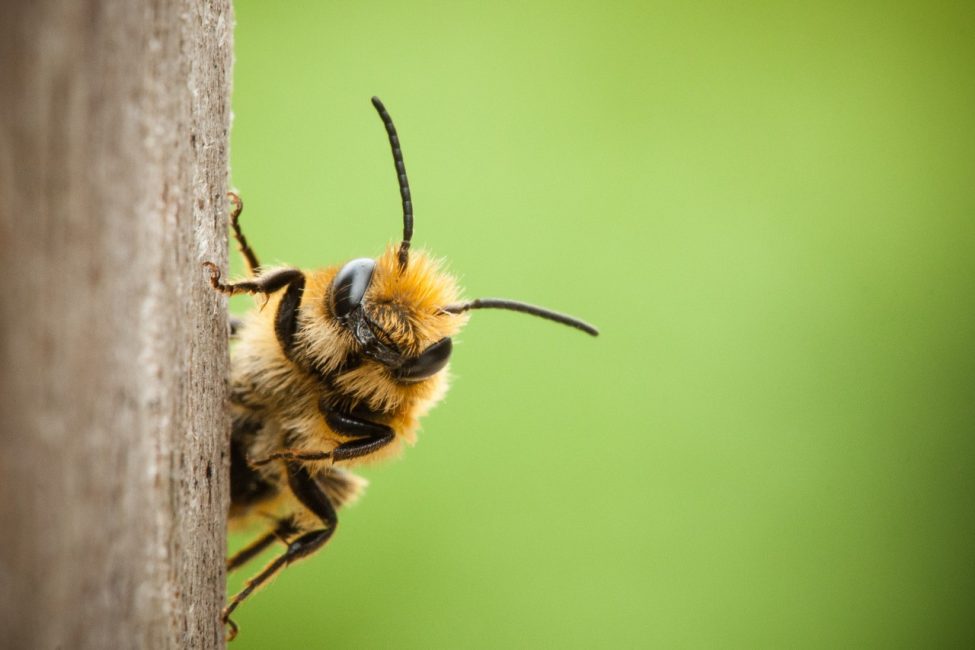
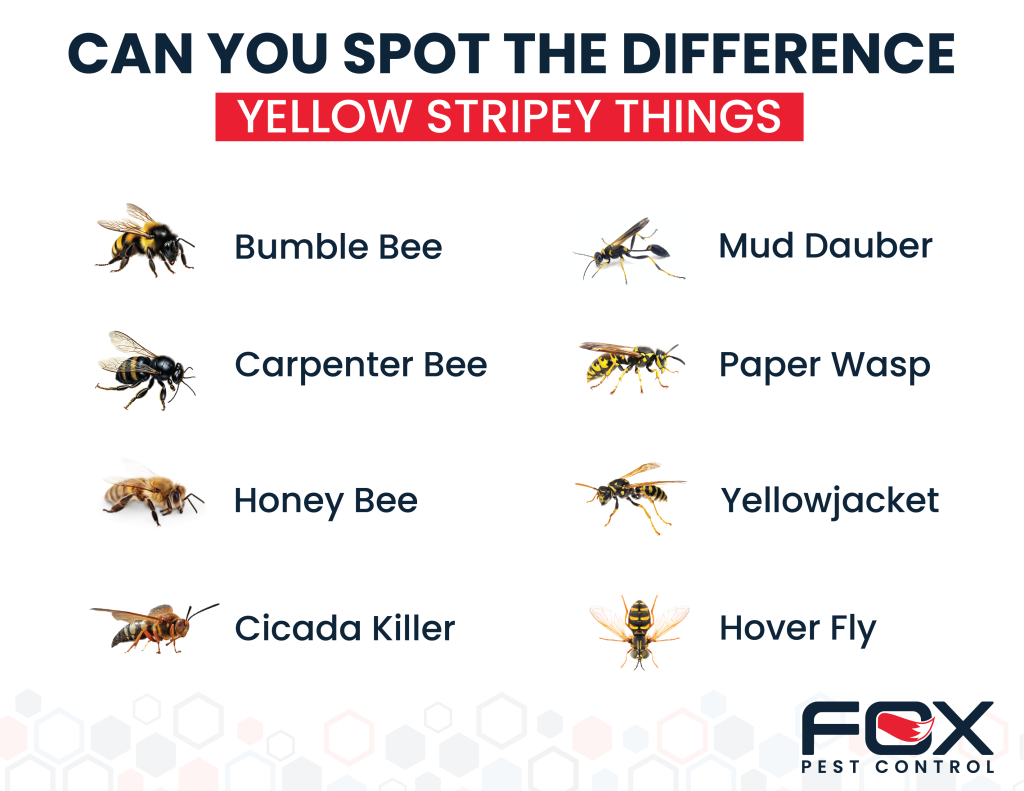
When we talk about black and yellow-striped stinging insects, we’re usually talking about a type of bee or wasp. The most common species of bee that you may see are honey bees, bumble bees, and carpenter bees.
Some of the most common wasps you’ll see around are paper wasps, yellowjackets, hornets, and mud daubers. Cicada Killers are another type of wasp; they are currently only found east of the Rocky Mountains.
Each has its unique characteristics, but they share some common features that often lead to confusion.
What do bees and wasps have in common?
Despite their differences, these yellow-striped insects share some striking (pun intended) similarities:
- Stingers: Both wasps and bees have venomous stingers used for defense and subduing prey, and their stings can be painful. Both are territorial when they feel their nest is threatened.
- Warning Colors: While they may not be identical twins, wasps and bees often share similar features, such as yellow and black stripes or markings. This resemblance can sometimes lead to confusion between the two insects.
- Social Structure: Many species of wasps and bees live in colonies with a structured social hierarchy. Within these colonies, there are queens, workers, and sometimes drones (male bees). They work together to maintain and defend their nests.
- Pollination: Both insects play crucial roles in ecosystems. While bees are the primary pollinators, wasps also help to pollinate plants, ensuring the growth of fruits, vegetables, and flowers.
What are the differences between bees and wasps?
Now, let’s explore what sets these striped stingers apart:
- How they look: Honey bees have round, fuzzy bodies that help them gather pollen. Wasps are like the sleek athletes of the bug world, with slim, smooth bodies and a tiny waist. When they fly, their legs dangle down, kind of like they’re cruising on a stroll.
- Attitude: Wasps can be a bit edgy, especially if they feel their turf is being threatened. They’re known to sting multiple times. Bees, on the other hand, are usually chill unless you really bug them.
- Stinging: Wasps are the “repeat offenders” of the stinging world and are very aggressive. They can sting multiple times without batting an eyelash. But bees, poor things, only get one shot at it. As mentioned above, once they sting, they leave their stinger behind and die.
- Hangouts: Wasps are more like city dwellers; they’ll set up shop in all kinds of places, from trees to under your eaves. Honey bees, on the other hand, are more into rural life. You’ll find them in hives or buzzing around flowers, doing their pollination thing.
- Diet: When it comes to diet, wasps are more like the carnivores of the insect world. They’re not picky eaters and will chow down on other insects. Bees, on the other hand, have a sweet tooth. They’re all about the nectar and pollen life, which makes them the rock stars of pollination.
- Sweet Tooth: Honey bees are the number one source of honey that we consume. They collect nectar from flowers and store it in their hives. Most wasp species do not produce honey at all, and for those that do, the honey serves no value to us.
What’s up with Hoverflies?
Hoverflies are harmless little insects that are not bees or wasps – but they sure look like them! They have bright, colorful patterns that mimic bees and wasps, which helps them avoid predators.
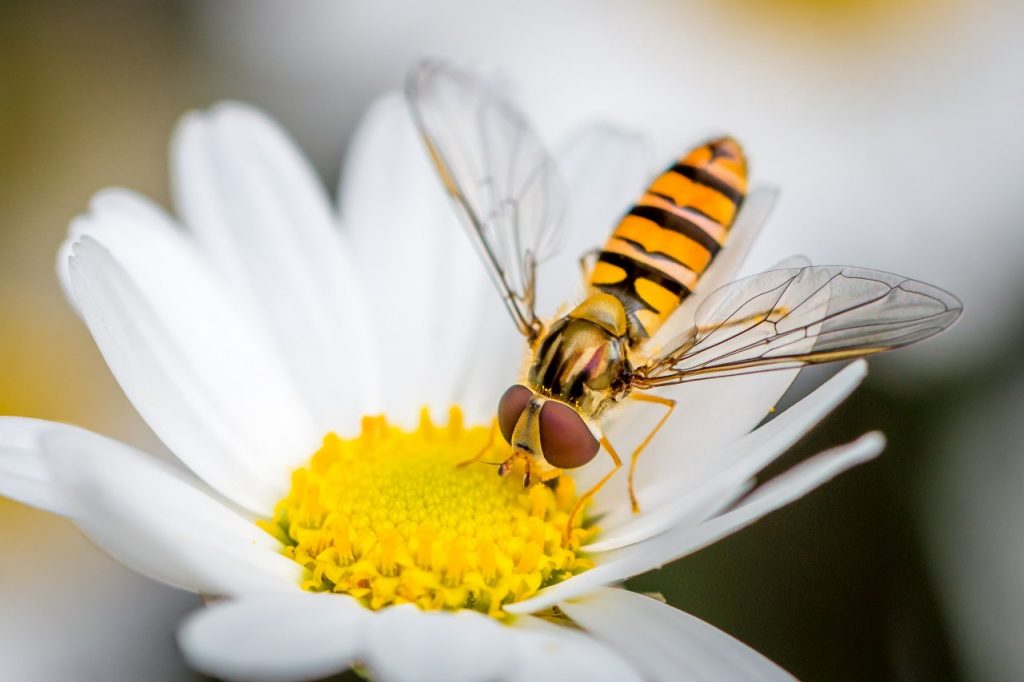
Hoverflies don’t sting or bite, but just like bees, they are excellent pollinators. They are also great natural pest controllers, feeding on aphids and other harmful insects.
- Appearance: Hoverflies are usually smaller and more delicate than bees and wasps. They only have one set of wings, compared to bees and wasps, which have two. Their eyes are more noticeable, too, almost taking up their whole head.
- Behavior: Known for their ability to hover in one spot and then dart quickly away, hoverflies move more erratically than bees or wasps.
- Habitat: Hoverflies do not create nests, nor do they live in colonies or hives. Adult hoverflies are solitary and lay their eggs on plants in small clusters.
Respect the Buzz
While these yellow-striped stingers may seem intimidating, it’s important to remember that they play vital roles in our ecosystems. Wasps are natural pest controllers, and honey bees are essential pollinators. There are steps you can take to keep them out of the areas you want to enjoy most and encourage their work in pollination.
Here are some tips to help you avoid unwanted encounters and manage these insects:
- Keep Them Out: Seal up any cracks or gaps around your home so bugs can’t make themselves at home. Also, keep your food and garbage covered when you’re outside.
- Know Your Bugs: Get to know the different types of yellow-striped insects. Knowing what you’re dealing with helps you figure out the best way to handle them.
- Call the Pros: If you find a nest or have a big bug problem, it’s best to get professional help. Trying to remove a nest on your own can be really risky.
At Fox Pest Control, we understand the importance of safely managing stinging insect populations while respecting their place in nature. Our experienced technicians have several methods to treat and remove nests and hives, ensuring the safety of your family and the environment.
So, the next time you see those yellow stripes buzzing by, take a moment to appreciate the fascinating world of these stinging insects – but from a respectful distance, of course!
Fox Pest Control
no bugs. simply better.